Chapter three
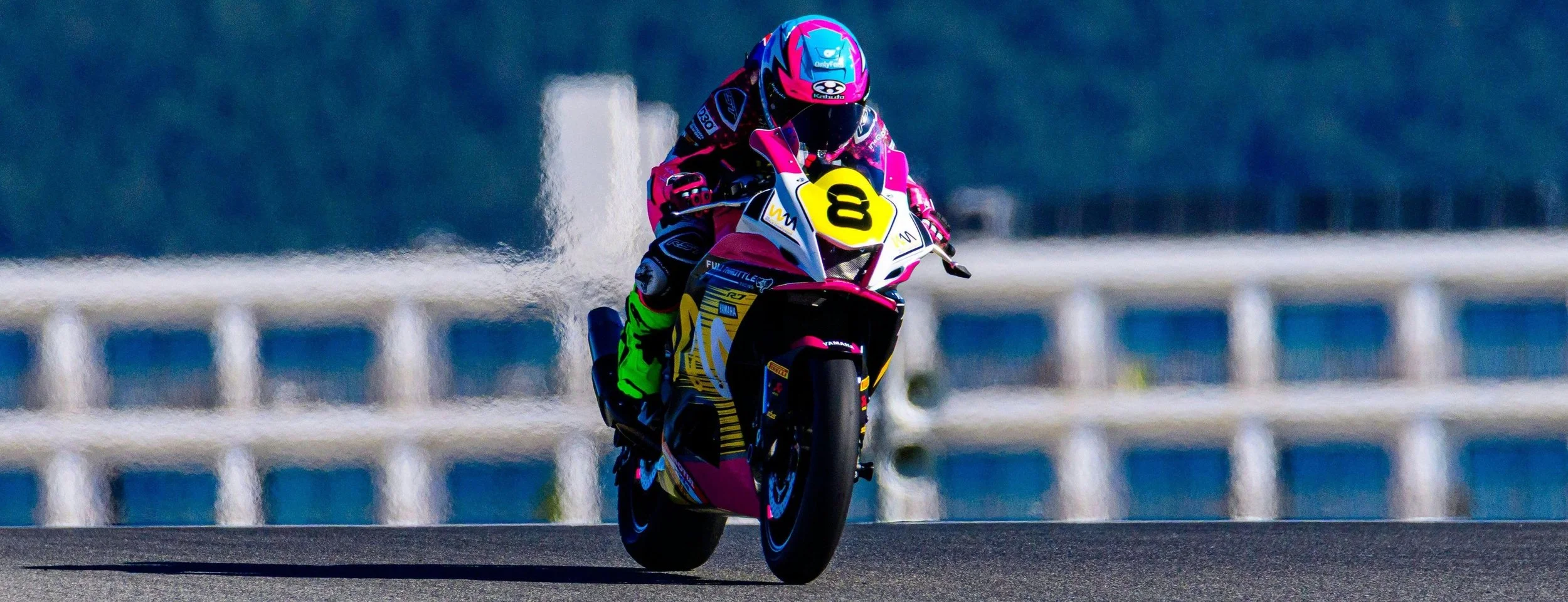
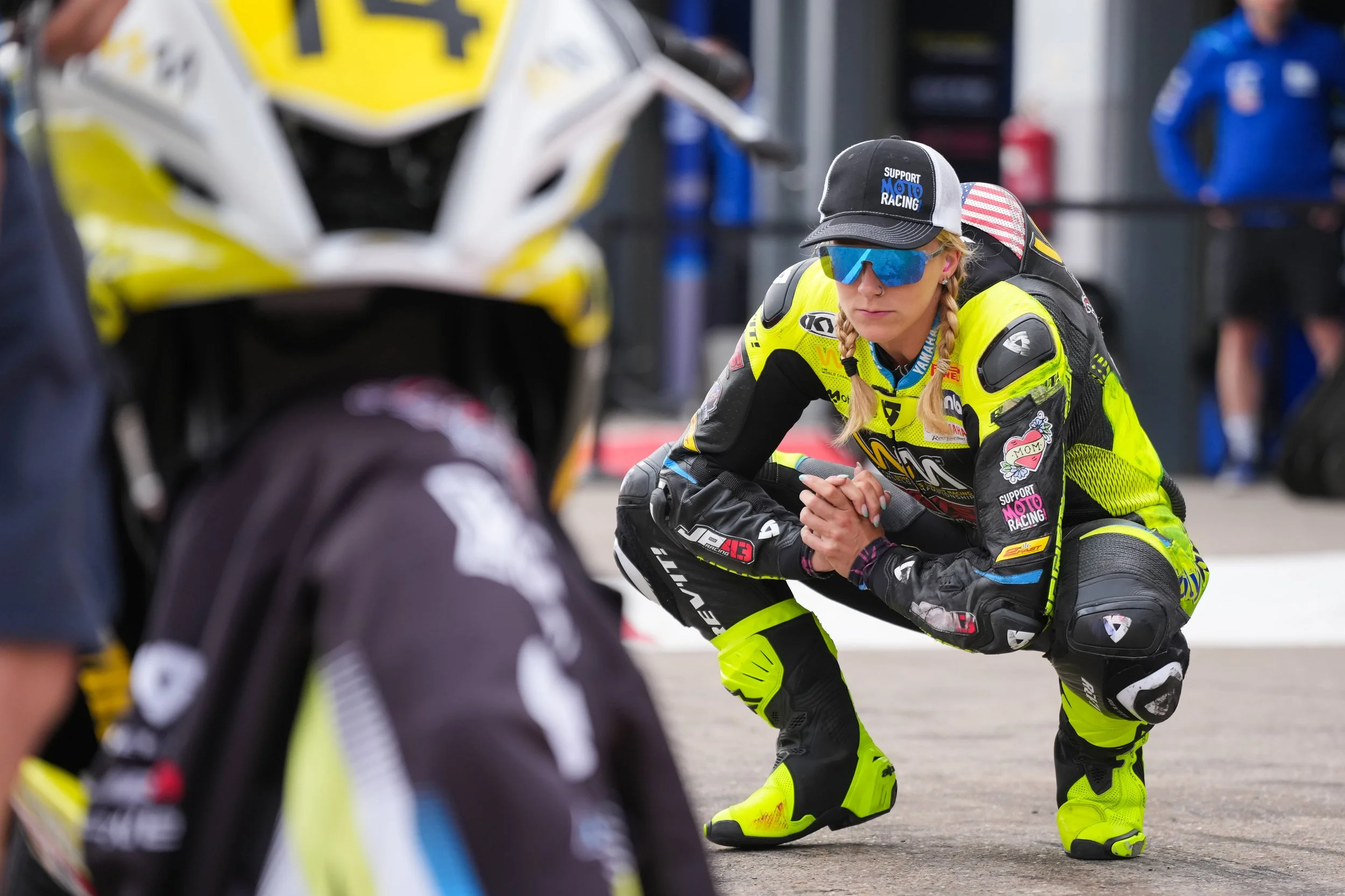
ZUMA Press, Inc. / Alamy Stock PhotoShe was lapped for an entire year the first time she ever raced a motorbike. Not once or twice – every race, for 12 months straight, Tayla Collins came around to find the leaders already bearing down on her again. She loved it anyway.
Two decades on, Tayla – known on the grid as Tayla Relph – is racing in the WorldWCR, the first-ever global, women-only motorcycle racing series, having survived a five-year medical retirement that nearly ended her career before she’d properly started it.
Speaking to The 1v1 Project at Donington Park, Tayla reflects on the illness that stole years she can’t get back, the mental discipline of a grid she’s still learning to navigate without medication, and what real representation in her sport actually looks like.
Born to do it
There’s no romantic origin story here, Tayla admits – just a toddler causing a scene on the floor of a Crusty Demons freestyle motocross show in Australia.
“I threw a tantrum on the floor and refused to leave because I just wanted so badly to copy what I was watching,” she says.
Santa delivered a little PW50 that Christmas. She was riding it by three.
Her parents tried to buy themselves a few extra months of peace, telling her she couldn’t ride her motorcycle until she’d mastered a push bike without stabilisers.
She had it figured out in minutes.
“Apparently I went 20 metres with the training wheels off. I just stopped my push bike dead in its tracks. I threw it to the side, and I ran to the garage to put my helmet on.”
No fluke
The first time Tayla realised she could make a name for herself in the sport was 2016 – the year she became the first woman ever to win a race in the Australian Superbike Championship (ASBK), riding in the Moto3 class.
She went on to take a second win that season, finishing third overall.
“I proved a lot to myself. I proved a lot to a lot of other people as well,” she says. “I also proved it wasn’t just a one-off thing – I went on to win more races that season. I had genuine pace to win against the boys in the national championships.
““I proved a lot to myself. I proved a lot to a lot of other people as well.””
“I shut a lot of people up when I did that.”
She’d already made history years earlier, at 16, when she became the first Australian woman to compete at a Red Bull MotoGP Rookies Cup selection event – though a crash on the day left her with a broken wrist.
“There’s not a lot of female representation in motorsport,” she says. “With everything I achieved, I was always the first person to do it.
“At the time, that felt serious. But going into a world championship, I’ve realised it really was child’s play.”
Fast, not female
For years, Tayla was firmly against the idea of a standalone women’s championship. She saw it as a smaller stage – a consolation category rather than a proving ground.
What changed her mind wasn’t a single moment but a slow recognition of a ceiling that talent alone couldn’t break through, however fast the fastest women were becoming.
“Whether people want to admit it or not, women do have genetic disadvantages compared to men,” she says. “There is a point in time where we need to start having those conversations a lot more openly.”
If anything at all, she argues that this should raise the level of respect for what women in the sport are already achieving, not lower it.
“If we could carry the same amount of muscle as men do, if we had the same testosterone levels – I genuinely believe women would take over motorsport.”
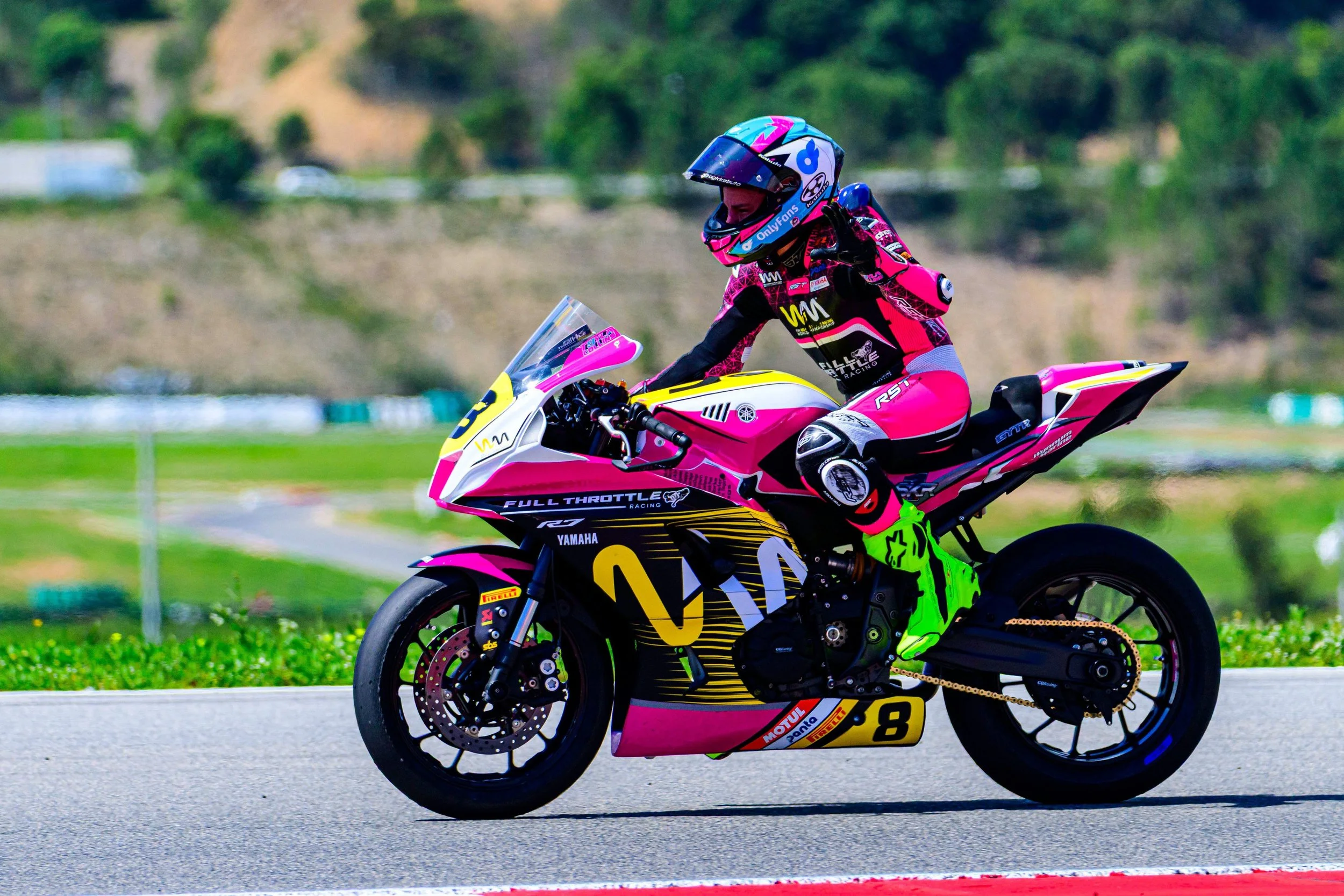
ZUMA Press, Inc. / Alamy Stock Photo. Tayla made the move from Australia to race in the WorldWCR.
WorldWCR, she says, finally proved her wrong about women needing a separate championship – not because the physical gap disappeared, but because of what it did to the way results were reported.
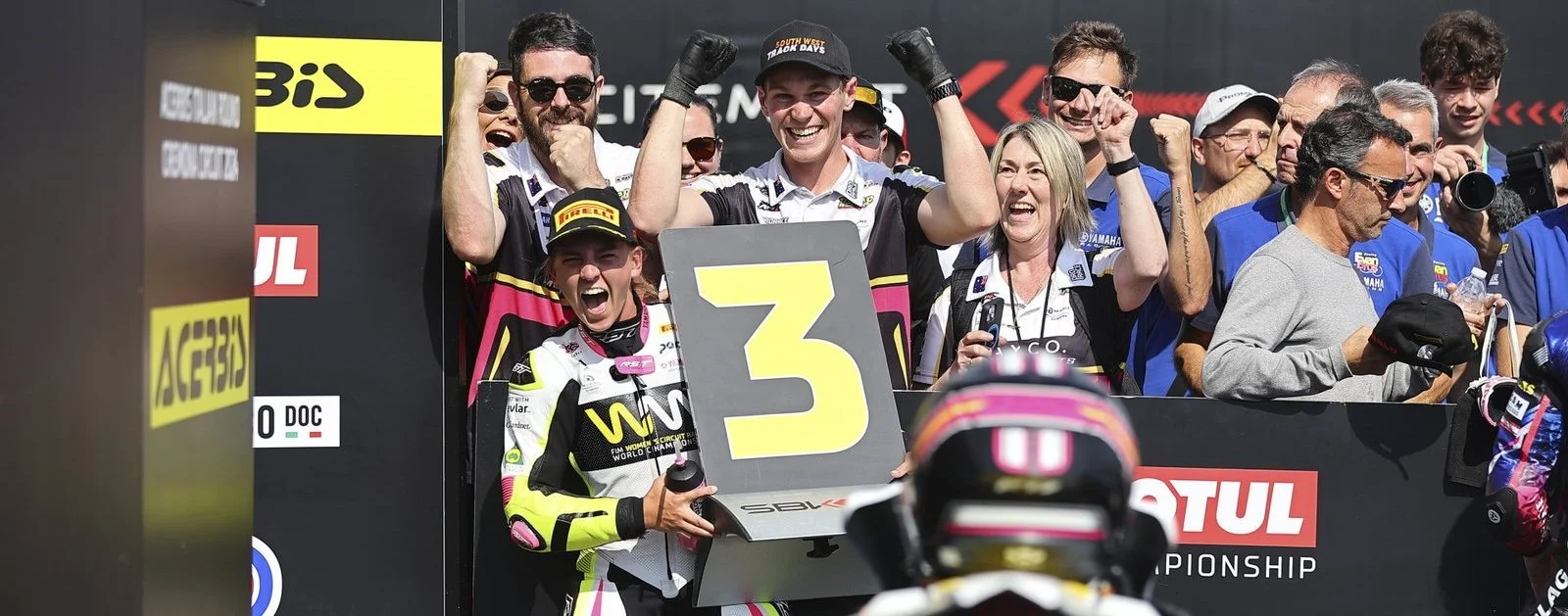
Tayla’s first podium came in 2024 – and the coverage that followed made the point for her. Outlets from Just Bikes to WorldSBK led simply with the result: ‘Tayla Relph takes first podium in WorldWCR’.
“It wasn’t that a female Tayla Relph had made the podium,” she says. “It was just Tayla Relph on the podium. My gender was no longer the headline.
“That’s what we need more of. It’s about what we’ve genuinely achieved and how fast we are – not the fact we’re women in motorsport.
“We’re getting exposure for a different reason now.”
For the wrong reasons
Before the WorldWCR existed, Tayla says the attention she received didn’t always feel earned.
“When I raced in ASBK, even if I wasn’t at the front, I was still getting a lot of exposure as the only woman on the grid,” she reflects.
“I feel there were a few times where I didn’t deserve to be mentioned because I wasn’t getting the results. That’s when you realise the segregation a little bit.”
Sponsorship carried a similar complication. Being a woman in the sport didn’t open doors faster – it slowed them.
“A lot of businesses don’t take us seriously at a first glance. When I go to a business and say I race in a world championship, they almost instantly disregard me, thinking I’m at the back of the pack.
“It took a lot of convincing for companies to want to get on board.”
““It wasn’t that a female Tayla Relph had made the podium. It was just Tayla Relph on the podium. My gender was no longer the headline.””
Five lost years
Scepticism from sponsors was one thing. By 2018, Tayla had taken her first ASBK Supersport 300 podium – all while dangerously ill, a fact almost no one around her knew.
“I lost a heap of weight. I struggled really bad with incontinence when I was racing,” she says.
“I knew something was really wrong, but I was so scared to go to the doctors because I felt I was on the verge of having everything taken away from me.”
By 2019, she was getting dizzy on the bike mid-race, bleeding, catching salmonella and infection after infection despite eating nothing that should have caused it.
““I had racing taken away from me when I wasn’t ready for it to be.””
The eventual diagnosis – Crohn’s disease, on top of pre-existing coeliac disease – forced her into medical retirement at 21, on steroids and immunosuppressants that made racing impossible.
“I had racing taken away from me when I wasn’t ready for it to be,” she reflects.
“There were so many things that when I was laying in the hospital bed, I absolutely regretted. I regretted not training hard enough. I regretted not eating properly.
“I just wished I’d done things differently when I had the chance.”
She spent those years working in journalism and running her own athlete management agency, still close to the paddock she thought she’d lost.
Getting back on
When the WorldWCR opportunity appeared, Tayla applied without telling her husband, Ted, convinced she had no realistic chance after a long period away from the bike.
“I was like, ‘There’s no way I’ll get selected. I’ve hardly ridden a motorbike for five years, let alone raced or competed at world level,’” she says. “Then I got selected, and I had to tell him… what do we do now?”
Crohn’s disease hasn’t gone away, and it never will. She manages it now without the medication she’d otherwise rely on, which isn’t permitted on race weekends under anti-doping rules.
“Stress causes Crohn’s flare-ups, and I race motorbikes for a living. Those two things don’t go very well together,” she says with a smile.
“I have to take each day as it comes, and not take any days for granted. I’ve had the sport taken away from me once, and I don’t want that to happen again.”
““Stress causes flare-ups, and I race motorbikes for a living.””
Silence on the grid
Tayla also has ADHD, coming off medication that’s similarly restricted on race weekends – another adjustment that meant relearning, from scratch, how to manage her own mind on a race weekend.
On the grid, that means one rule: no one other than her husband is allowed to speak to her.
“If somebody says a funny sentence, certain words will repeat over and over and over again in my head for like 30 minutes, and I can’t stop it,” she explains.
“Now everybody knows that the only person who can talk to me is Ted. Everyone else has to zip their lips and leave me alone.”
Behind the visor, something shifts.
“It’s lonely,” she says. “But at the same time, it’s the first time my brain is silent, in a way.
“It’s a whole team effort, but when you put that visor down, it’s just you. The team have done everything they can to get the bike in the best shape possible – once that helmet’s on, it’s all up to me.
“I kind of like it.”
Holy heck, what’s happening?
Ask Tayla for the moment that defines her WorldWCR career, and she doesn’t point to a race at all – she points to a pre-season test session at Cremona in May 2024, six months after she was selected, with barely any time to get race-fit or relearn the bike.
“I felt that no matter how hard I had worked, it wouldn’t be enough when I arrived,” she says.
Ted told her that finishing last would be fine – she was starting from scratch. But she topped the timesheets in the very first session of the day, ahead of riders like Ana Carrasco and Beatriz Neila.
“When Ted told me how I’d done, I was like, ‘Holy heck, what’s even happening right now?’”
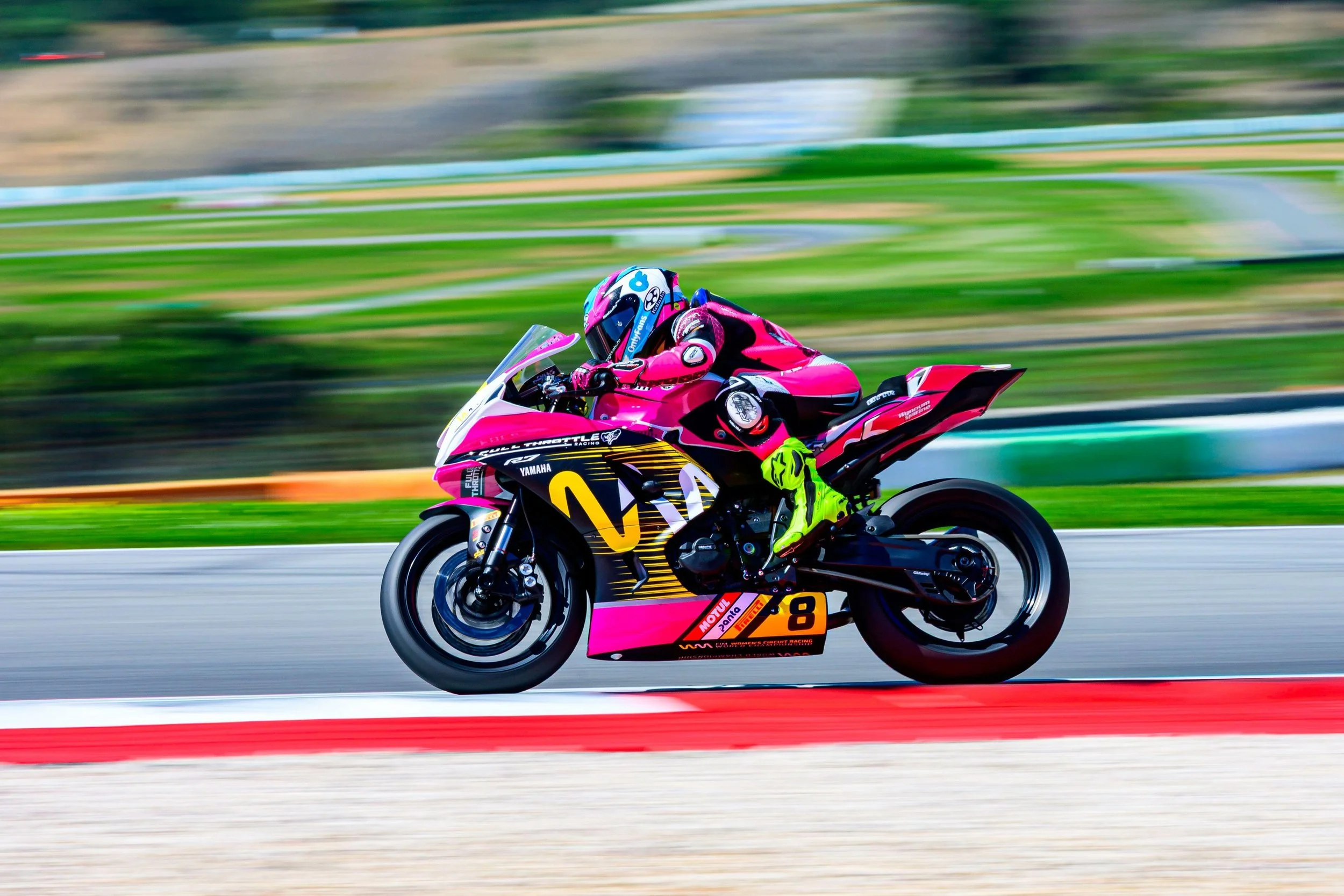
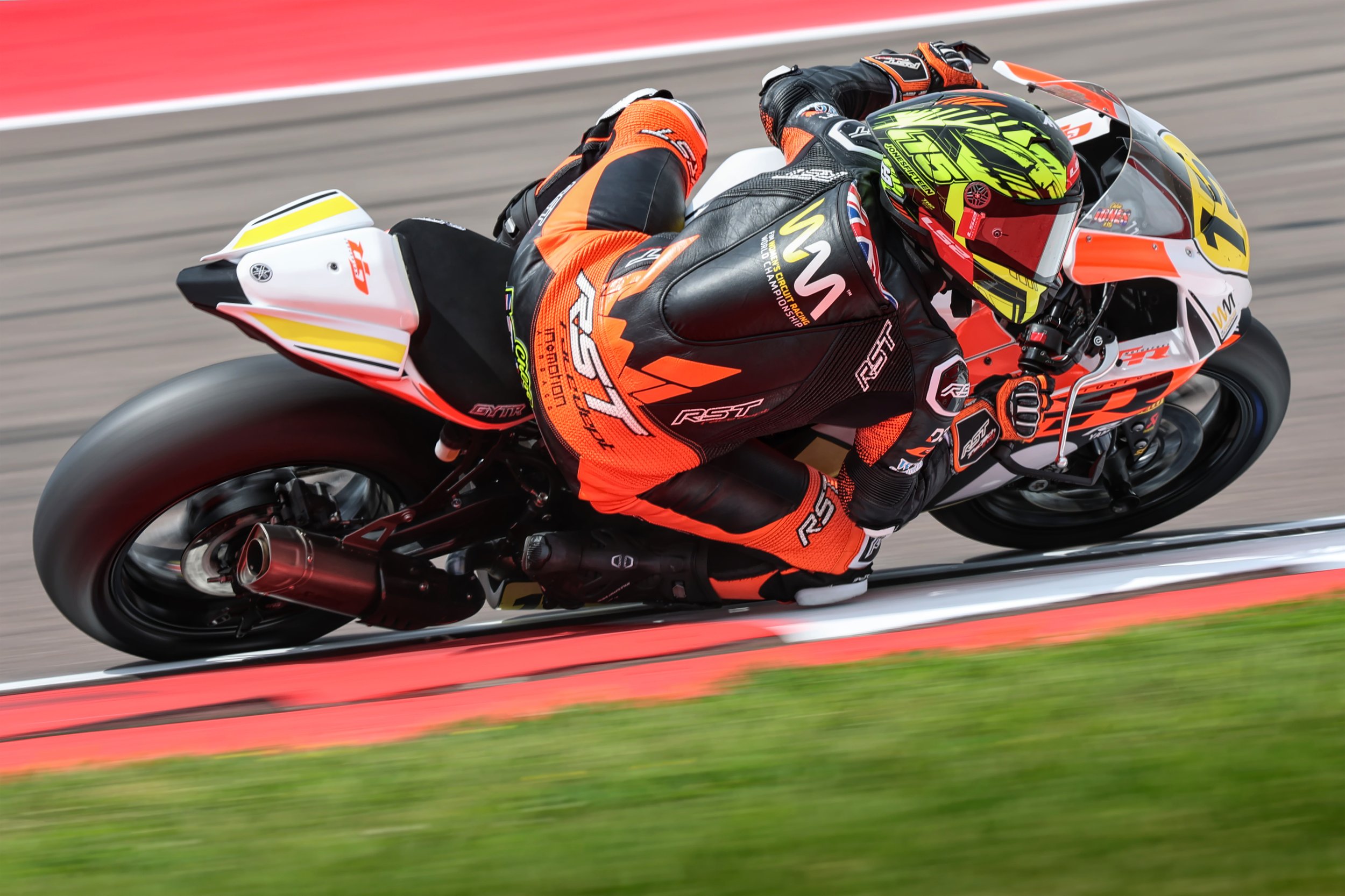
ZUMA Press, Inc. / Alamy Stock Photo. Tayla in action during Race 1 of the 2026 WorldWCR season, with Full Throttle Racing.
The rest of that debut season taught her how fast the ground can shift – from a high like Cremona to a crash a few weeks later at the opening round in Misano.
“There’s always another weekend,” she says. “But at the same time, sometimes there isn’t. You’ve got to enjoy it as much as you can, because you never know when it’s going to be your last.”
It’s this, more than any single result, that she returns to when comparing herself to riders with a decade more experience on these same circuits.
“I heard a quote that really resonated with me,” she explains. “It was: ‘Don’t judge your chapter one against somebody else’s chapter 10.’
“This is chapter three for me. I’ve never raced in Europe. I’ve never raced on these circuits. This is only my third year going into the world championship, and I’ve had to learn a lot.”
““This is chapter three for me.””
Assen bubble
Some of that learning has come harder than others.
A red-flag crash at Assen earlier this season – just hours after she’d qualified a career-best fourth on the grid – has stayed with Tayla longer than most.
“I had so much hatred and resentment because I was still trying to prove where I stood in this championship,” she admits.
“I truly believed that when I got P4 at Assen, I would never get the opportunity to start that far up again. It scared me. You start questioning everything: Was it because I was in P4? It’s hard to explain.
“I’ve been living in that little Assen bubble of hatred for a long time.”
She’s been working through that doubt with a sports psychologist – learning, slowly, to treat every moment as an opportunity rather than a threat.
““I’ve been living in that little Assen bubble of hatred for a long time.””
To the girl on the Peewee 50
After all it’s taken to get here, Tayla says there’s very little she’d change about the seven-year-old cleaning mud off her bike before she’d even climb back on. Her levels of grit have never been a problem – she had that in spades.
It’s everything around it she’d do differently.
“I would tell her to take the sport a lot more seriously – my nutrition, my training. I think I would be a lot further in the sport had I understood how much of an impact that could actually have.”
Asked to sum up what it’s taken to get here in a single word, she doesn’t hesitate.
“Resilience.”
And to any girl putting a helmet on for the first time, wondering if she’s fast enough to belong: “You could be slow as all buggery, but that’s not to say you’ll be slow forever. Every single person starts somewhere.
“I was lapped the very first time I ever raced – I got lapped for an entire year. But I just absolutely loved what I did, and I kept on going.
“Don’t take that first ride as your final opinion on what you can achieve. That’s just chapter one.”