Drinking from a fire hose
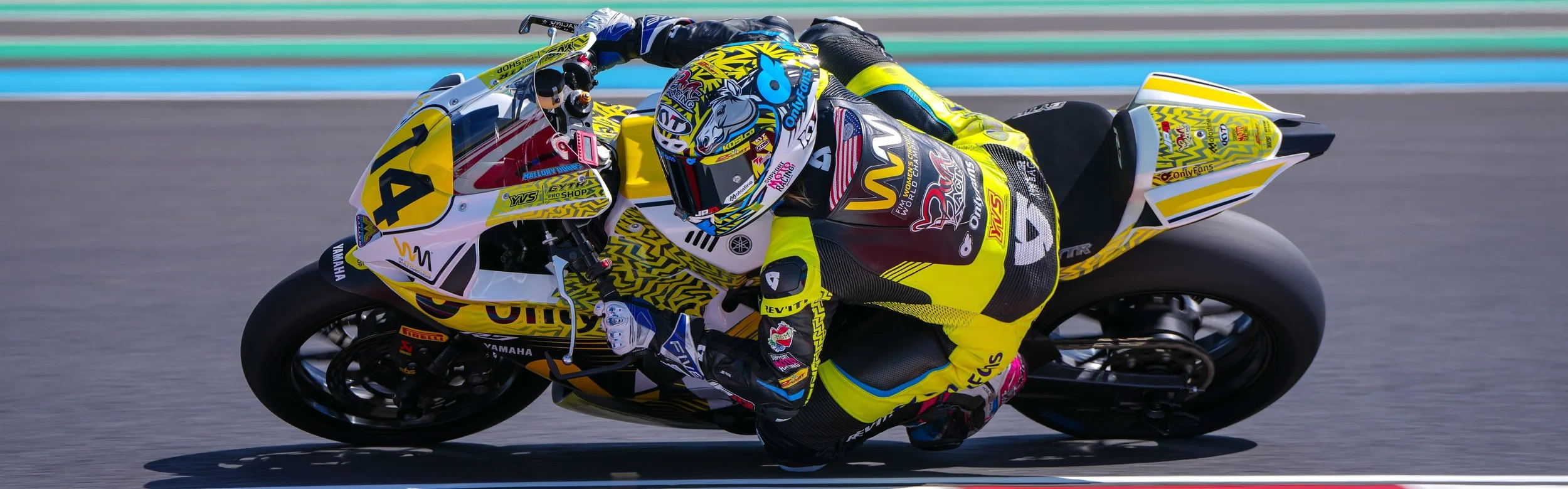
Mallory Dobbs didn’t grow up around motorcycles. She grew up around horses – showing them competitively through her teenage years long before she put a set of racing leathers on for the first time.
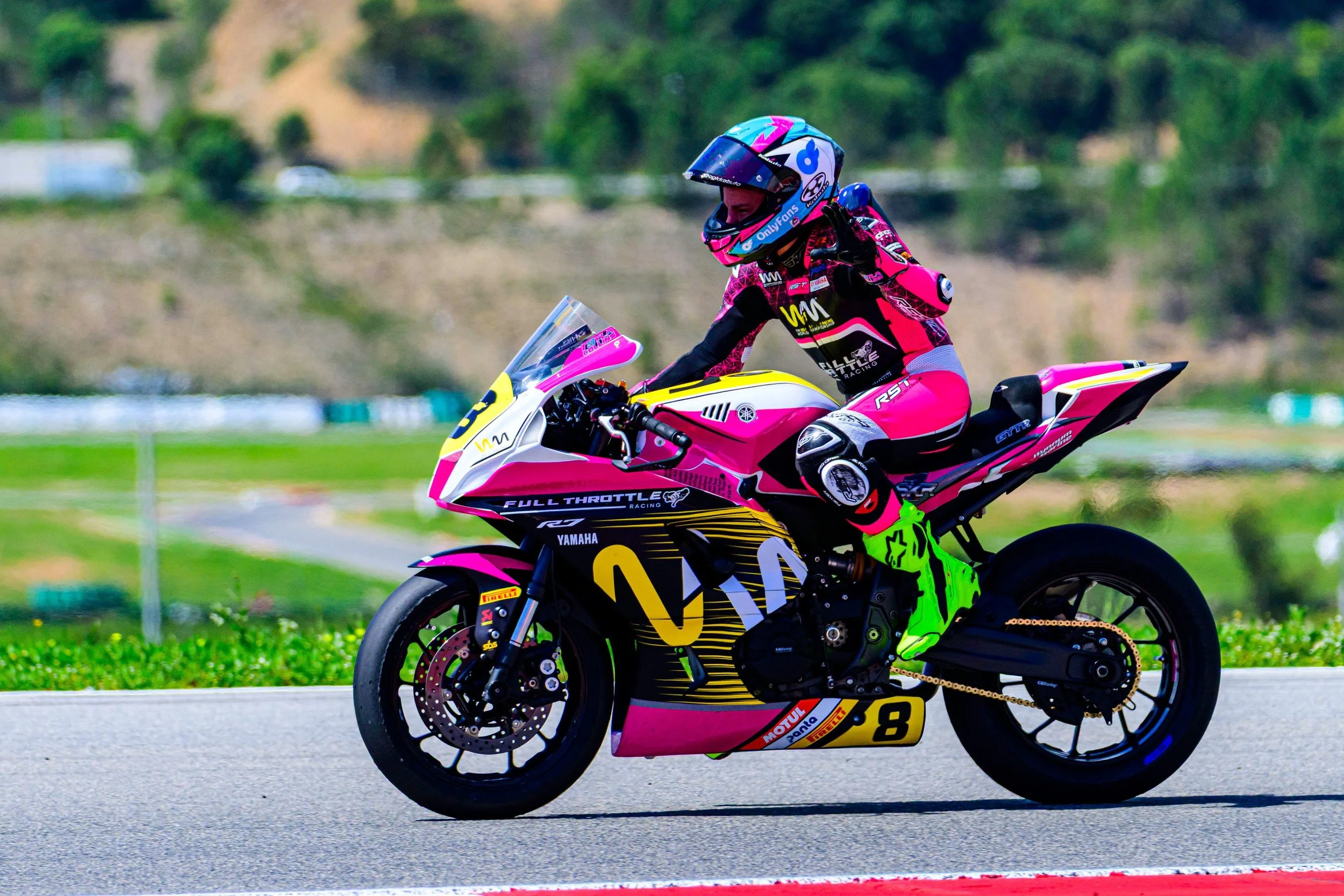
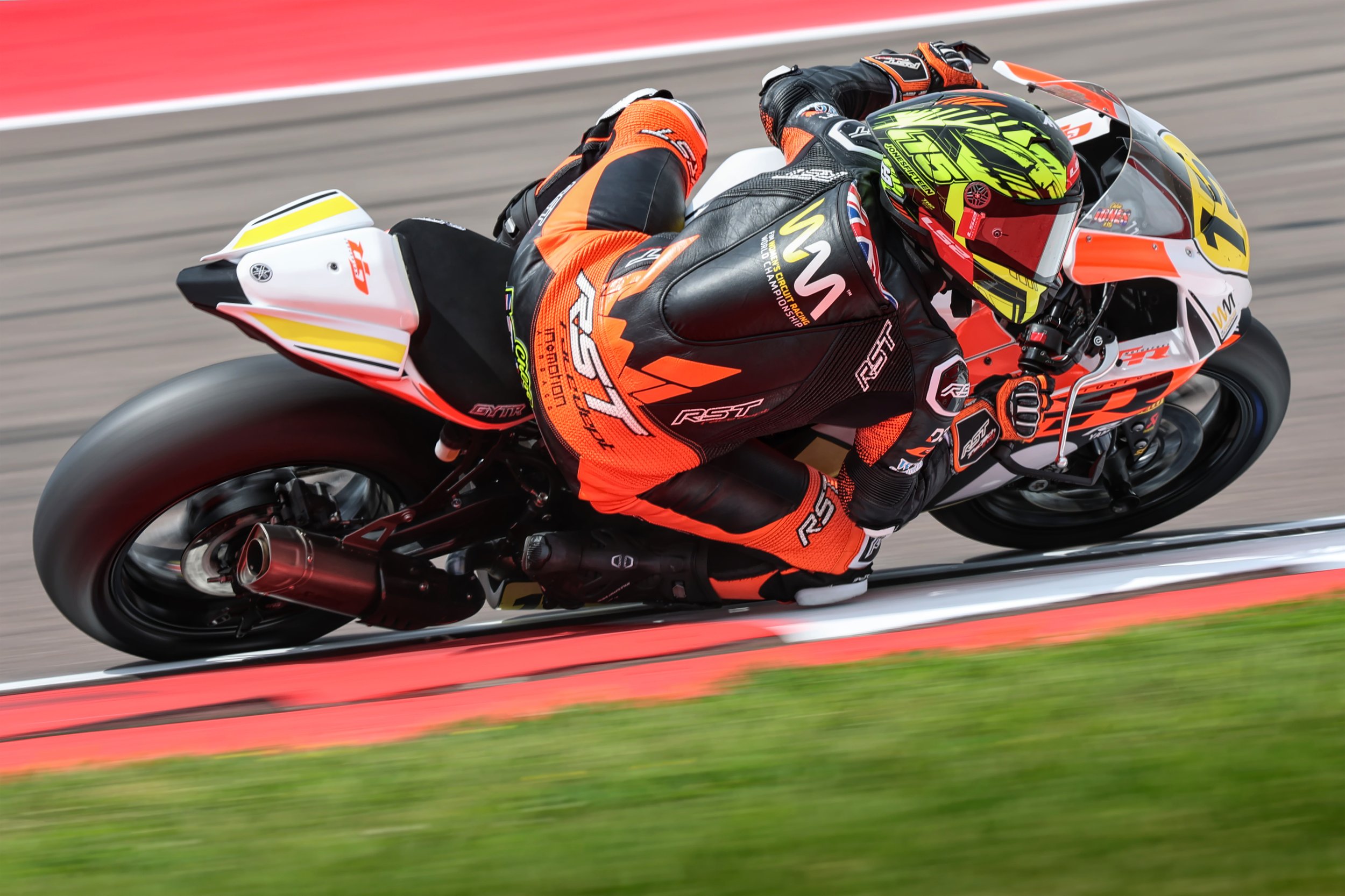
But a late start on two wheels – she didn't ride until 21 – hasn't stopped her becoming the only American woman to score points in the WorldWCR, the first-ever global women-only motorcycle racing championship, all while working full-time as a civil engineer.
Speaking to The 1v1 Project at Donington Park, Mallory reflects on a career she never planned for, the particular isolation of racing a continent away from friends and family, and why closing the gap to the front is a question of what she’s willing to give up, not whether she has it in her.
Before bikes
A childhood in the equestrian world shaped Mallory far more than people might assume. It wasn’t a casual hobby; it was a serious commitment.
“I gave up a lot to do that. I didn’t have a lot of friends. I quit band because I couldn’t make the games – horses were everything,” she says.
In 2013, she took a horse she’d trained herself to the World Championship Show in Tulsa, Oklahoma, and came home with a world title. It had been her goal for years, and she picked her college specifically so she could stay near her horse to make it happen.
““I’d have a shit day, and I’d go to the barn and just be at peace. That was my therapy.””
“It was really cool. It was like, ‘Oh, I did it. I trained my own horse. I went to the world show. I did the thing. I became a world champion.’”
The horse became something steadier than a hobby during her parents’ divorce midway through college.
“It was very hard to deal with while I was in school,” she says. “I’d have a shit day, and I’d go to the barn and just be at peace. That was my therapy.
“I definitely attribute a lot of the resilience I have now to when I was showing.”
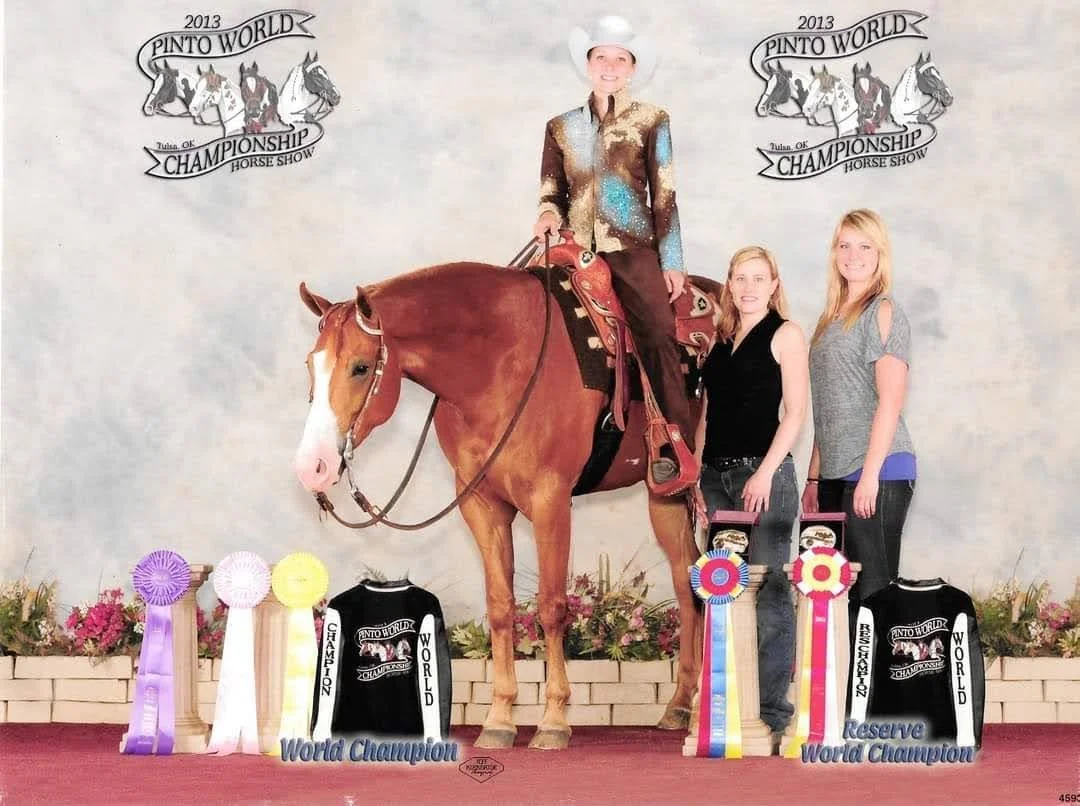
World Champion: Mallory in Tulsa, Oklahoma (2013)
Six months in
Mallory kept showing horses for a couple more years, but was ready for a new challenge. That arrived at 21. She rode on the back of her then boyfriend’s motorcycle, and hated the experience enough to buy her own.
“As most of the story goes, we broke up, and I just kept riding,” she says.
A group from college talked her into her first track day. That led to a road trip to Thunderhill Raceway Park, California, with six people she barely knew, towing the bikes in her dad’s truck.
“I was in love with it,” she says. “Six months after getting my first bike, I bought a race bike and started club racing for fun on the weekends.”
““My mentality has always been to see how far I can go.””
Then MotoAmerica – the premier national motorcycle road racing championship in the United States – came to the Ridge, her home track in Washington State. It was 2020 and she had to be there.
Two years later, she was lining up in MotoAmerica’s Supersport class on a ZX-6R, competing against riders who’d been on bikes since childhood.
“My mentality has always been to see how far I can go,” she explains.
“But my résumé is much shorter than a lot of the girls, or any racers really, who have been doing this since they were five or six years old. Learning to race has been the hardest thing I’ve ever done in my life.
“I’ve basically been drinking from a fire hose.”
Worst-case scenario
Her first full MotoAmerica season, in 2023, doubled as an audition and a warning. Mallory ran her own team – logistics, transport, management – largely out of her own pocket.
“I spent so much money,” she says. “I got done with that and said, ‘I don’t think this is sustainable. I can’t do it again.’”
She’d mentally prepared to wind the whole thing down: maybe a couple of rounds the following year, then likely retirement. There didn’t seem to be anything left to chase.
““It wasn’t meant to be something I really thought of. I didn’t think I’d still be racing now or doing this.””
Then the WorldWCR was announced.
“I wasn’t sure what the championship was about – there wasn’t a lot of information available,” she says. “I asked my boyfriend, ‘Should I apply for this?’ He said, ‘Why not? Worst case, you get accepted and can’t go.’”
She applied, was accepted, and three years later is still competing.
“It wasn’t meant to be something I really thought of. I didn’t think I’d still be racing now or doing this.”
Couch critics
Racing exclusively against women, Mallory says, has brought a different kind of pressure than anything in her career so far – one she’s still working out how to place.
“I have more stress and anxiety racing here than I ever have,” she says. “I’ve had a lot of crashes myself, and a lot of people crashing into me. My first year in the championship, I was taken out four times, through no fault of my own.”
Some of the difficulty is external. She’s conscious that where she finishes reads differently to outsiders when the field is entirely women, regardless of how strong the competition actually is.
“Because women racers are already discredited, finishing 20th in a women’s class makes people think I’m no good,” she says. “It’s hard to remind people that these are the top 20 women in the world.”
““This is the hardest thing I’ve ever done in my life.””
It’s part of why she’s returning to race on home soil this summer, in the MotoAmerica Twins Cup class – America’s national championship for twin-cylinder motorcycles – riding a different bike, on a different platform, with a completely different team.
“It’s a whole new situation; it’s a track I’ve never been to. But I’m excited for the challenge, and how much better I am racing back home again.
“I just feel like I have to prove myself to others, because all these people on their couches are speculating that it can’t be that hard to race at this level.
“They’re wrong. This is the hardest thing I’ve ever done in my life.”
Continent away
Unlike many of her competitors, Mallory doesn’t have close friends or family in the paddock. Currently, all six rounds of the WorldWCR season take place in Europe, and the cost of flying people over from America – anywhere from $1,500 to $2,000 for a round trip – puts it out of reach most weekends.
“It’s a bit tough,” she says. “I don’t really have an outlet, and you can’t really go to someone else’s team and talk about stuff.”
She’s careful not to flatten the comparison, pointing to riders whose circumstances she recognises as different rather than easier.
“Some of these girls are living here because they have to – that’s their sacrifice. I have a full-time day job, so at the same time I have to work while I’m here.
“That’s where the comparison thing comes in – I can’t compare myself to girls who are 20 years old and have been raised on motorcycles since they were little. It’s all they’ve known.”
““It’s hard to remind people that these are the top 20 women in the world.””
Wanting more
On weekdays, Mallory manages a team as a civil engineer, putting together permits and construction plans. It’s a career she built before racing became anything more than a weekend hobby, and one she’s not planning to give up.
“It’s a little late for me in my life to quit my day job and go full-time racer,” she says. “I know I’m getting a paycheck every week. If something were to go wrong in racing, I have that as a way to still survive.”
In short, it’s a rhythm dictated by two full-time worlds – one that rarely grants her the time to properly rest or reset.
““Now I have to do the work to get to the next stage. That’s a big reason I keep pushing to be here – it’s because I want to be doing better.””
“I do enjoy it – I’m so glad I’m here – but at the same time, I want more,” she says. “When I look back on this, I’m going to be like, ‘I raced in a world championship, and I’m currently the only American woman to score world championship points.’
“That is so cool, and I can’t discredit that. But I’m also still figuring out what getting further would actually take – and whether I’m ready for that.
“I think I’m past the point of natural talent,” she explains. “Now I have to do the work to get to the next stage. That’s a big reason I keep pushing to be here – it’s because I want to be doing better.”
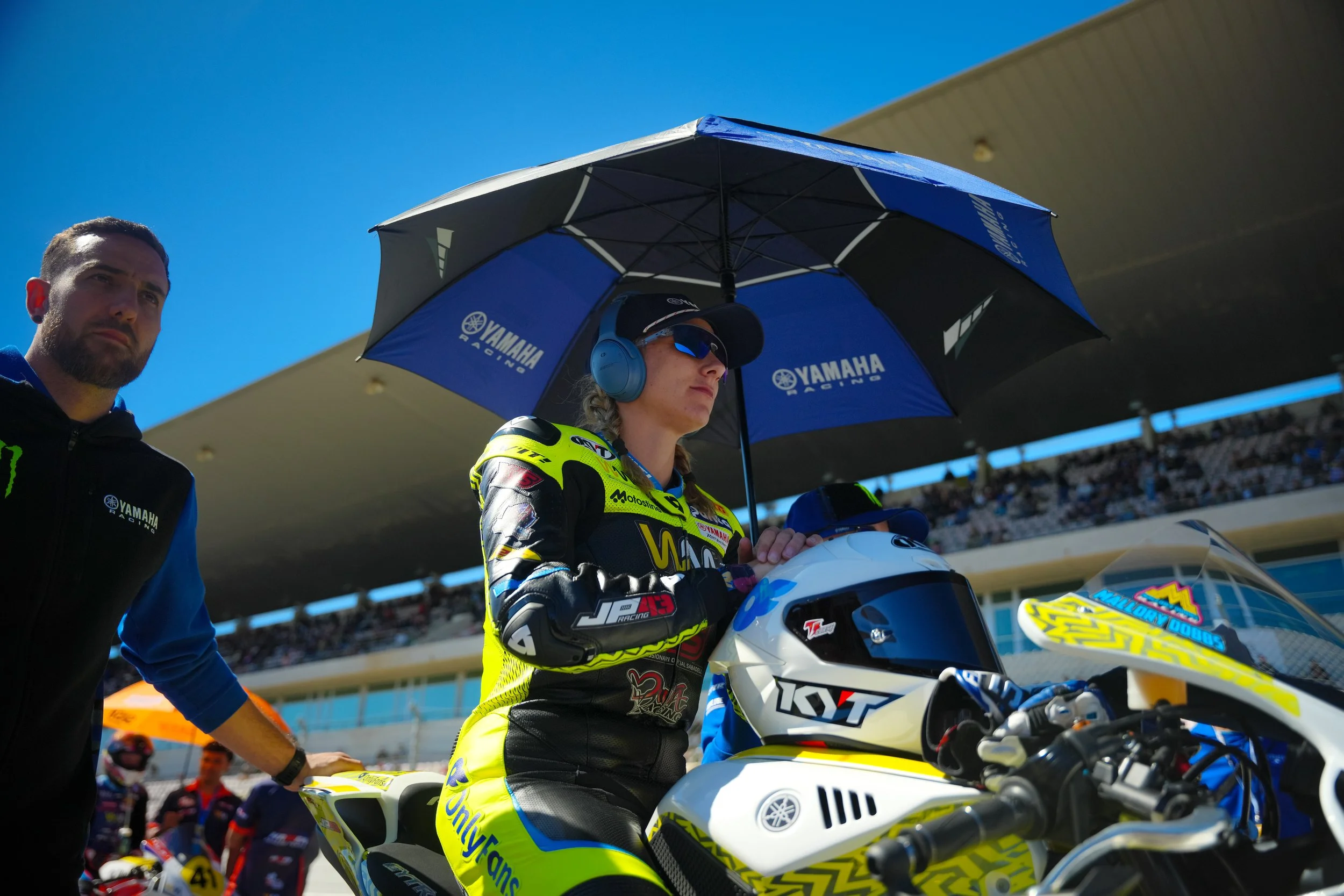
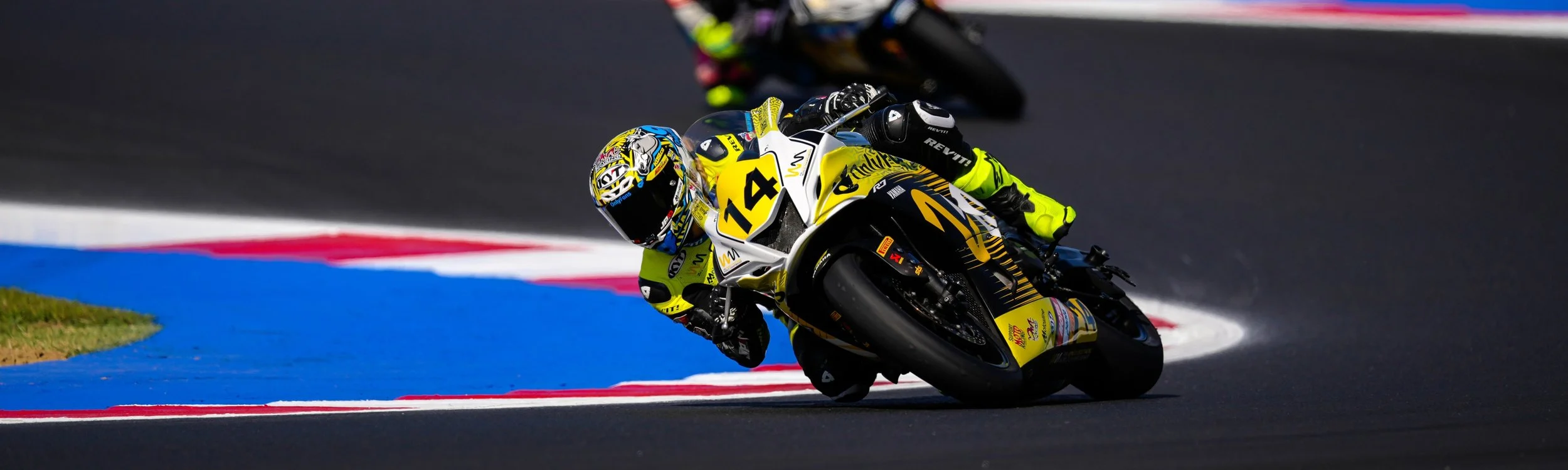
Mallory races in the WorldWCR – the first-ever global women-only motorcycle racing championship
Quitting isn’t an option
Mallory points to Race 2 at Assen, the second stop on the 2026 calendar, as the moment that defines her time in the WorldWCR – not a win, but a race where she ran in a group battling for fourth, the closest she’d ever been to the front, before finishing P10.
She didn’t post about it. She sat down in the changing room and wrote herself a note instead.
“I told myself: You can do this. You’re capable. Don’t ever doubt that. I wrote Mallory, the date, the time, and P10 at Assen.
“It’s really hard to remember those moments, because there are a lot of shit moments. When it finally comes together, you have to remember it.
“I get emotional even talking about it,” she adds. “It’s hard. It’s really fucking hard.”
Her take on what it’s taken to get here: “Grit. Quitting isn’t an option. We’ve got to grow from it, or do something different.”
It’s advice she extends to any girl starting out, coming from someone who didn’t have a childhood memory of her own to draw on.
“Be graceful with yourself in the learning, and learn at your own pace,” she says. “Even if it takes you a bit longer, it’s worth it in the long run.”