Above everything else
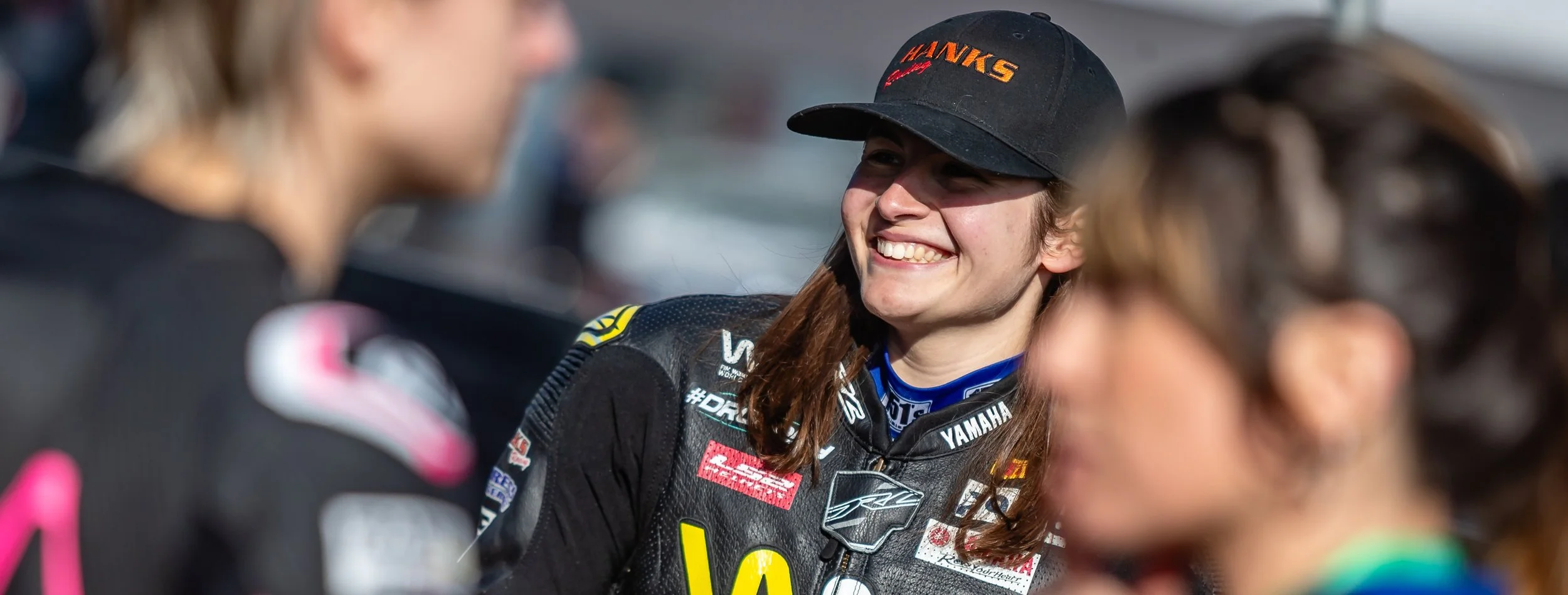
One of Jamie Hanks-Elliott’s first races ended with her knocked out cold on the ground – and it didn’t put her off for a moment. If anything, it settled something.
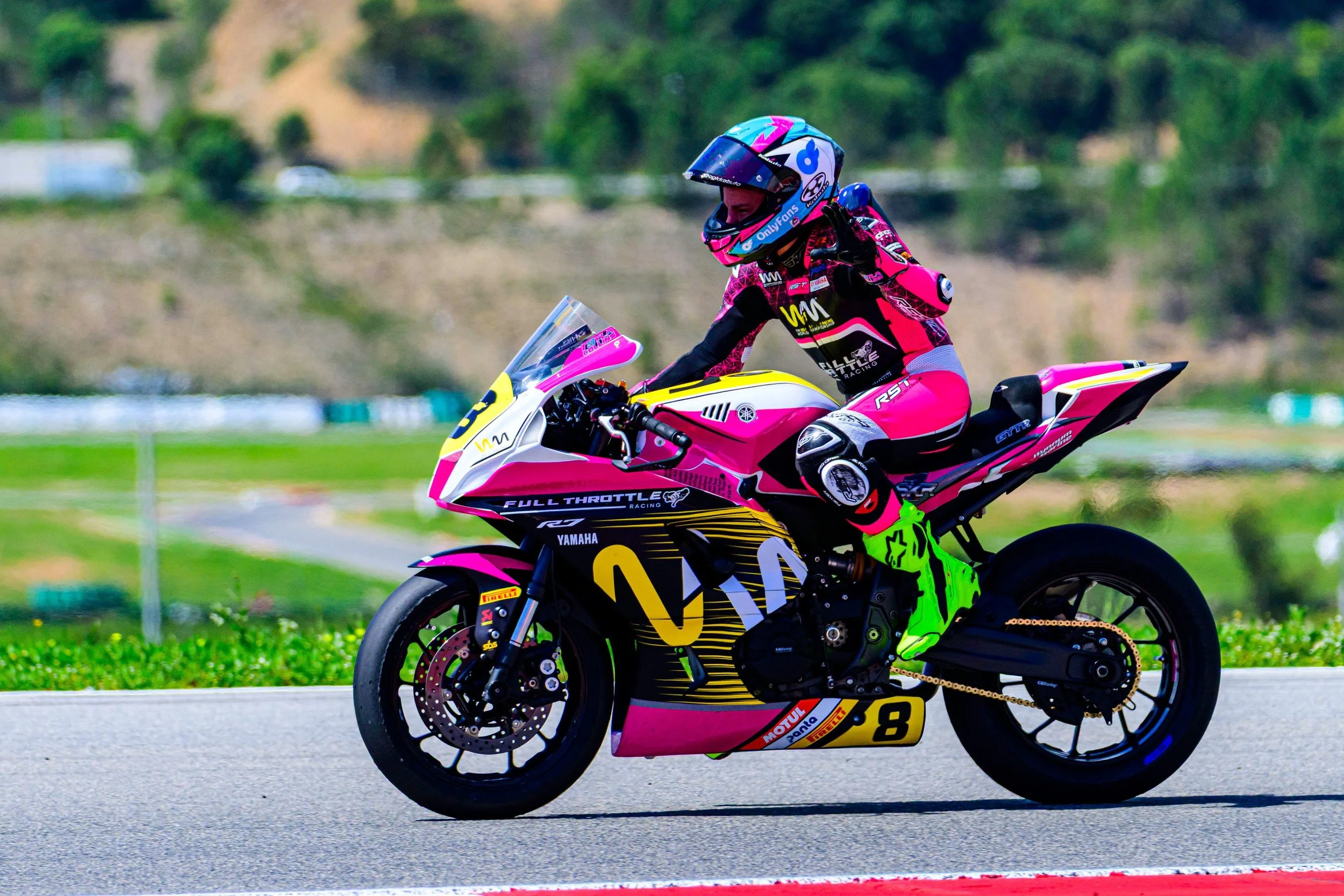
For the past decade, she’s carried her family’s name around the track – through British Junior Supersport, the BMW F 900 R Cup, and a full season in the WorldWCR, motorcycling racing’s first-ever standalone global championship for women.
Speaking to The 1v1 Project at Cadwell Park, Jamie reflects on the sharp learning curve of world-level racing, the perspective it gave her, and how 2026 has provided a season to be genuinely proud of.
“My mum said, ‘We’ll let you race, but you’ll know after your first crash whether you want to carry on,’” reveals Jamie. “You either think, ‘Yeah, you know what? That hurts. I’m not doing that again.’ Or you love the adrenaline.
“In my first crash, I knocked myself out. It’s probably still my biggest crash to date; I don’t even remember it. But the feeling you get on a bike overrides any fear – it’s part of it and why you do it. That’s what’s enjoyable about it.”
Change of plan
Motorsport wasn’t a hobby Jamie found by accident. Her great-grandfather raced. Her nan finished second as a passenger in the 1968 Sidecar TT. Her mum, dad and grandad all raced sidecars too.
“Racing is all I’ve ever known since I was born,” she says. “If I couldn’t race for whatever reason, I wouldn’t know what to do with myself. It’s what I wake up for.”
The plan was to follow her parents: race solo bikes until old enough to move across to a sidecar. UK rules meant she couldn’t be a passenger until 16, or a driver until 18 – so at 13, she practised on a 125cc bike, learning to ride up and down an industrial estate.
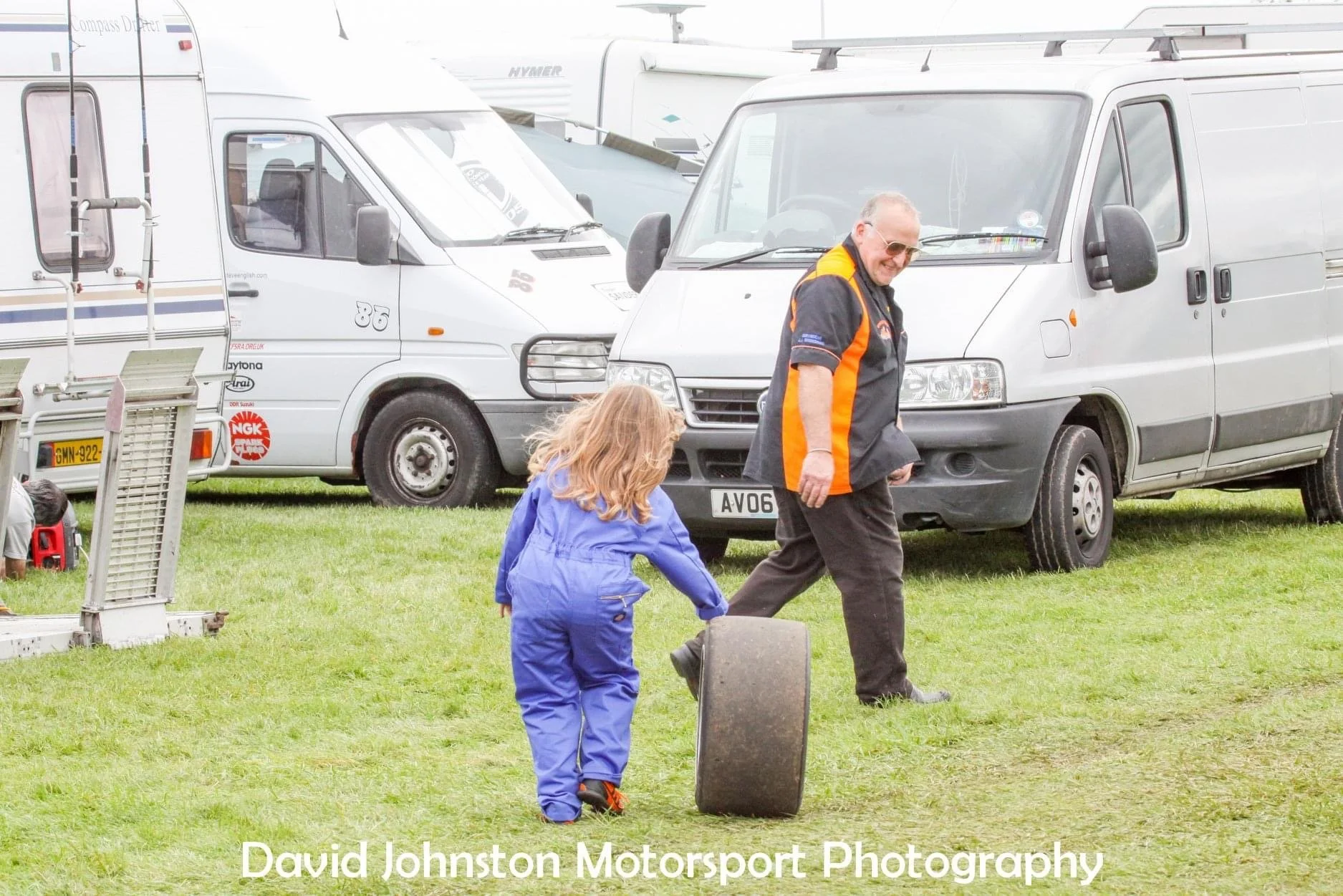
Eight years old and already part of the paddock setup
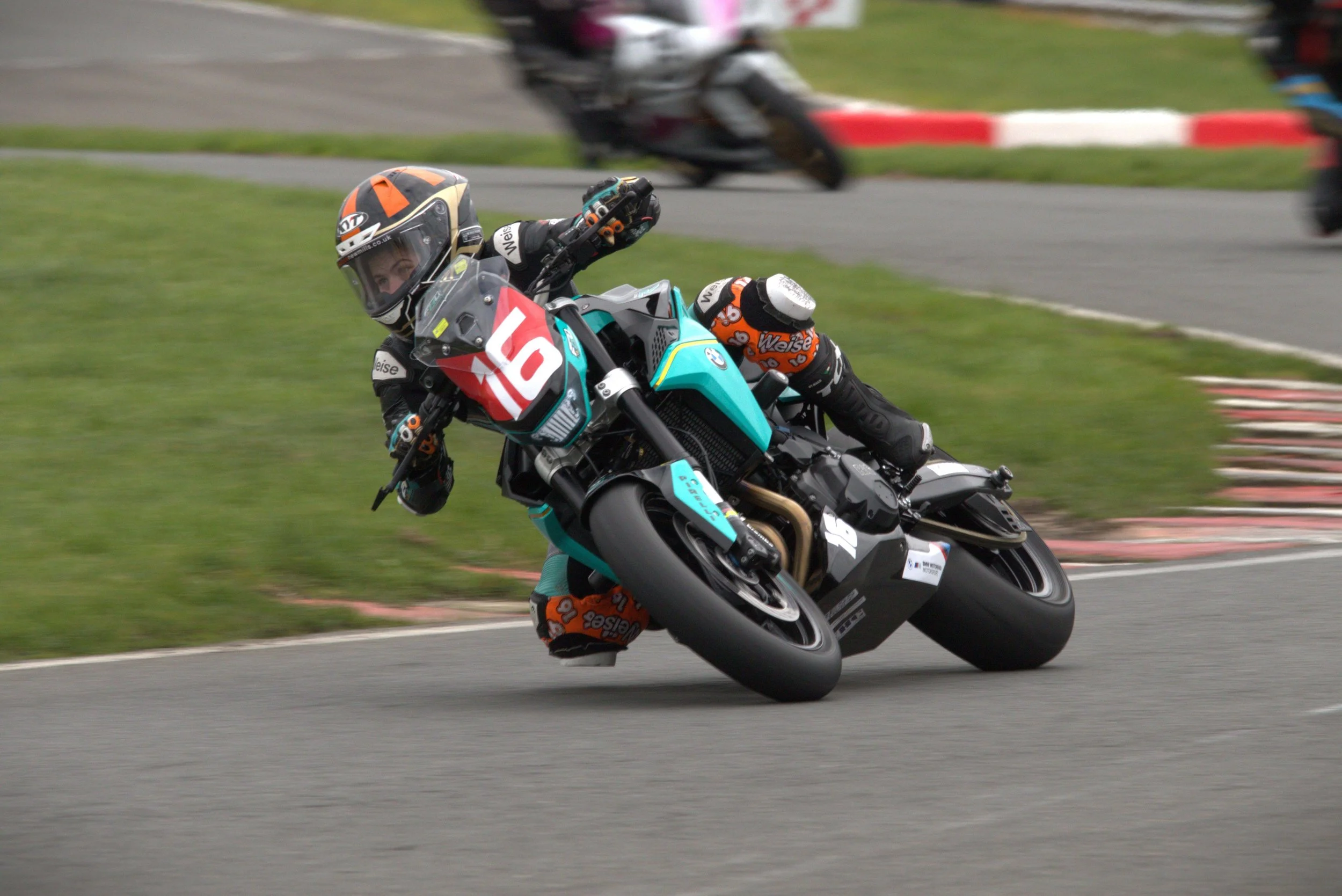
Richard Church / Alamy Stock Photo. Jamie racing in the BMW F 900 R Cup in 2024
“I always wanted to ride,” she says. “I used to have my own little set of overalls. There’s a picture of me when I was around eight, carrying a wheel around the paddock. I wanted to be involved in anything. I just had to wait for them all to decide to retire.”
By the time she was ready to commit, the sidecar plan had fallen away.
In 2022, she joined Faye Ho’s all-female FHO Racing squad to compete in the British Junior Supersport Championship, before a 2023 campaign, littered with top-10 finishes, earned her a step up to the BMW F 900 R Cup in 2024 for a season.
Thrown in
With the bikes weighing around 200kg, the BMW class came with its own initiation.
“They’re so heavy to ride. I struggled so much. I actually finished one race and had to get my dad to peel my hands off the grips. I was like, ‘Dad, I can’t let go – my hands are seized on.’”
Her first taste of world-level racing came that same year, standing in for an injured rider for the final three rounds of the 2024 WorldWCR season.
She scored points, enjoyed it, and did enough to earn a shot at a full campaign the following year.
What she didn’t know was what 2025 had in store.
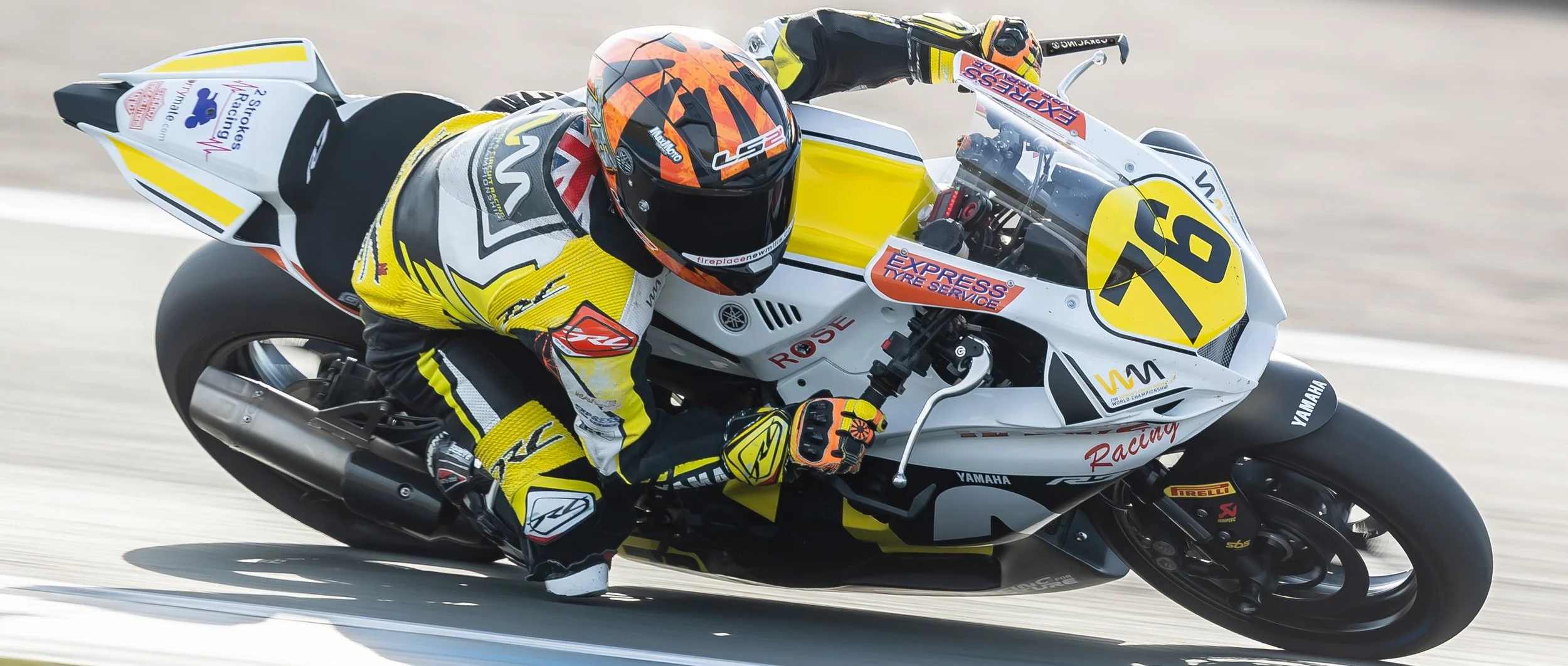
Stepping up to the world level: Jamie on track during her WorldWCR season“Due to circumstances out of everyone’s control, I was left without a team,” Jamie remembers. “But because I’d already built myself up to do a full season, I did it anyway – just mum, dad and me.”
Racing under her own banner, Hanks Racing, meant no data engineers, no experienced crew, no one who’d navigated a world championship before.
“That’s where I struggled instantly,” she reflects. “Everyone else had these teams around them – I felt like a bit of an imposter. Not because I wasn’t good enough, or that I didn’t trust my family, but because I felt different.
“At the end of the day, it was still down to me to ride the bike, but it does help to have that little bit of extra knowledge.”
““Everyone else had these teams around them – I felt like a bit of an imposter.””
Stuck in it
That imposter feeling followed her on to the bike more than she realised – nowhere more than at Donington Park, where she crashed on the out-lap of qualifying, picked the bike up, and had to complete the session on a bent machine.
“Everyone always expects you to step up on your home round,” she says. “I put so much pressure on myself. I was just that nervous. I wasn’t thinking properly, and it set my whole weekend up.”
Across the year, she similarly found herself crashing out of races, at speeds that shouldn’t have caused a crash at all. In her mind, at least.
“I got stuck in it. I kept telling myself, ‘I’m not going fast enough to be crashing.’ Then once you crash and don’t know what you’ve done wrong, you just go round thinking, ‘I don’t want to push, because it won’t work.’”
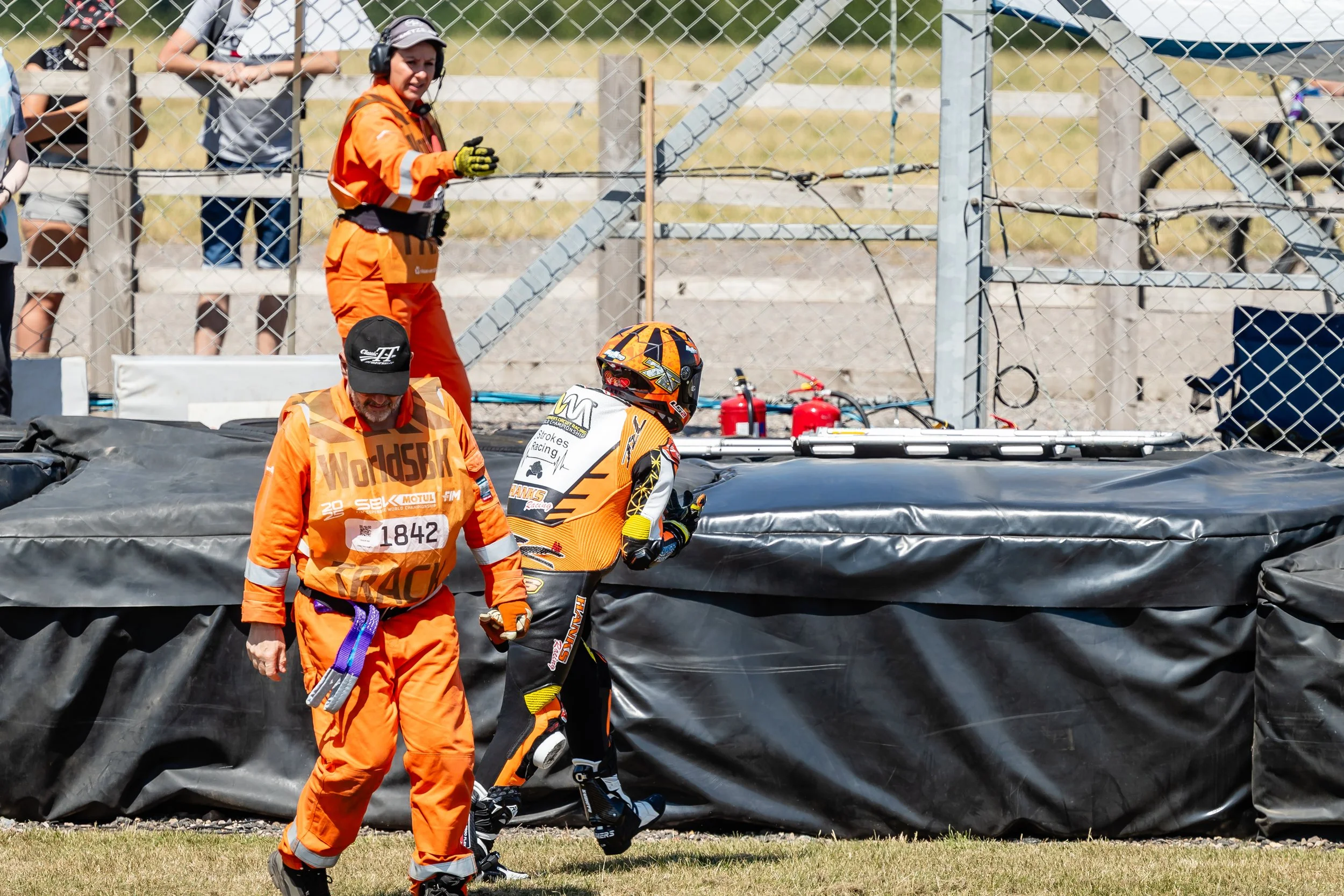
One of several crashes Jamie faced during a challenging 2025 WorldWCR season
There was an ongoing worry behind the crashes that may have played a part, too.
“I think because we were paying for crash damage as well, my family thought I was thinking about that. I don’t think I was, but maybe subconsciously I was going round thinking that if I have a big crash, it’s going to cost us a lot of money.
“If someone asked me directly, ‘Do you think about that?’ I’d say no. I don’t go round every corner thinking, ‘Don’t crash, don’t crash.’ But it can be a subconscious thing. I wouldn’t know for sure unless money genuinely wasn’t a factor.”
““I got stuck in it. I kept telling myself, ‘I’m not going fast enough to be crashing.’””
Saying it out loud
It was during that season Jamie began working with a mental coach – something she admits she’d never previously thought she’d need.
“I struggled a lot mentally last year, and it does affect your riding,” she admits. “I was going out with the mindset that I wasn’t going to do well, and it was so hard to get out of that.
“I’ve always thought I’d just get on with it. But someone approached me who wanted to help, and it did help. I just cared that much about getting it right.
“At the end of the day, I’m doing this because I enjoy it,” she adds. “I absolutely loved the experience I was having, but I struggled with feeling proud of my results.”
Part of what made that support valuable was having somewhere else to put the pressure.
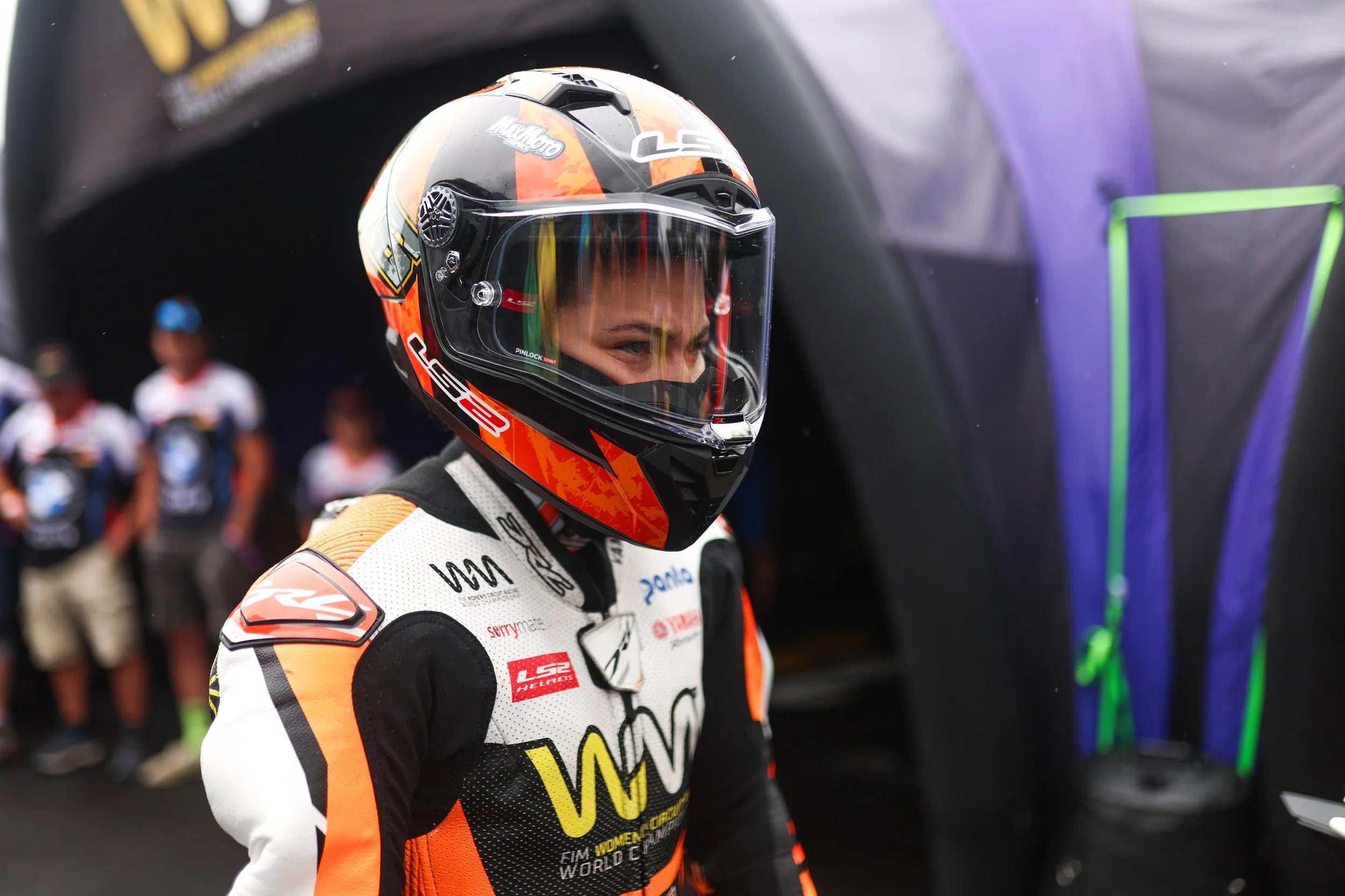
Working with a mental coach and establishing pre-race rituals have helped Jamie process race-day pressure
“I never really spoke to my parents about things. I didn’t want to put it on them, or for them to think I wasn’t enjoying it. It was never that at all – I just wasn’t having a good year results-wise.
“It’s weird how stuff like that helps – you think you’ll go on track and forget everything that’s in your head, but I don’t think you do. I think it follows you.”
She’s learned to build her own pre-race routine to help her manage her emotions on race day, too.
“I get really nervous before the start of a race,” she confesses. “I’m better now, but when I first started I would nearly be sick. I’ve had to teach myself to manage that.
“I have my own routines and stuff that I have to do. I won’t go out without my dog tag on – it has a little charm in it. But it’s more a superstitious thing. It’s not necessarily anything that will stop me from crashing. It’s just keeping me safe.”
““I was going out with the mindset that I wasn’t going to do well, and it was so hard to get out of that.””
Reading the data
Racing at world level for the first time also gave Jamie access to a degree of detail she’d never worked with before.
Small habits she’d have sworn she wasn’t doing – a tiny roll of the throttle coming out of a corner as she shifted position on the seat – showed up clearly on the data, costing her time she hadn’t known she was losing.
“It literally gave me the answers to going faster, and it helped me a lot with my overriding,” she says. “I was 100 per cent sure I wasn’t rolling off, but they showed me I was – and not once or twice but every single corner.
“I just wish it were as easy as looking at the data and going, ‘Okay, I’ll just do that,’” she smiles, “because then everyone would be winning. But it helped me understand my own riding in a way I hadn’t before.”
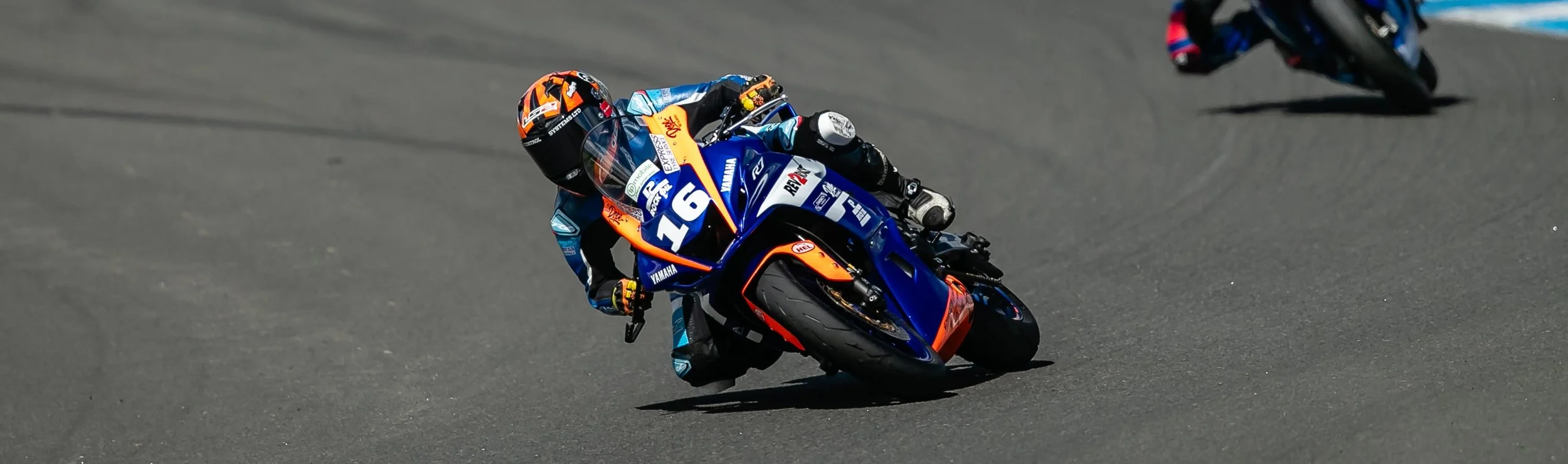
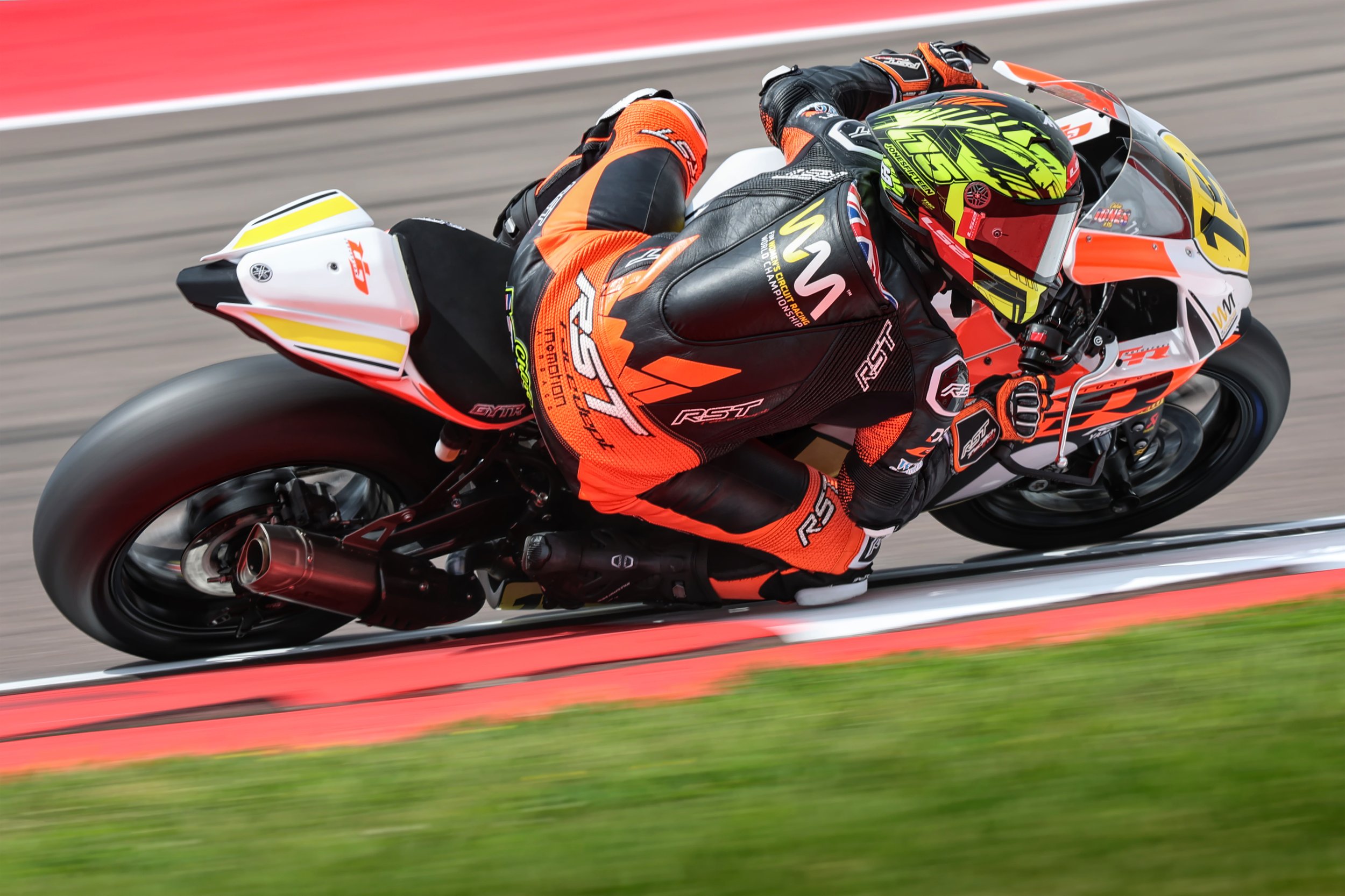
Back in BSB: Jamie competing on her Yamaha R7 for Rev2Race in the 2026 Junior Sportbike National Championship. Photo by Michael Wincott Photography No disadvantage
Jamie has had time to process what competing exclusively in the WorldWCR meant for her career – and how she views female-only grids as a whole.
“Some people don’t agree with women’s championships – they think it’s a bit like saying women can’t compete against men, so we need our own. Honestly, it’s 50-50 for me. Even when it came out, I wasn’t sure it was right.
“But I wanted to do it, because I wanted to be at that level – and it was nice to compete against other girls who’d come from the same kind of background as me.
“I naively went into it thinking, ‘I’m only competing against girls, it should be easier’,” she admits. “But then you remember all the other girls have also only ever raced against boys. We’re all just as good as each other.”
““I’ve never gone out on track and thought, ‘Oh, I’ll just see how I get on.’ I always go out to win.””
That conviction hasn’t wavered, and she points to Ana Carrasco – the first woman to win a solo FIM World Championship, in 2018 – as the ultimate precedent.
“Ana raced against the boys in the Supersport 300 World Championship and won. On the smaller bikes especially, I’ve never felt like I’m at a disadvantage. But I can also see how other girls go into it thinking that, because they were probably told it when they were younger and believed it.
“It’s never really crossed my mind, though. I’ve never gone out on track and thought, ‘Oh, I’ll just see how I get on.’ I always go out to win.
“Everyone’s just a figure in a helmet,” she adds. “I’m not a female rider – I’m just a rider. I don’t think about who anyone is when I’m on track.”
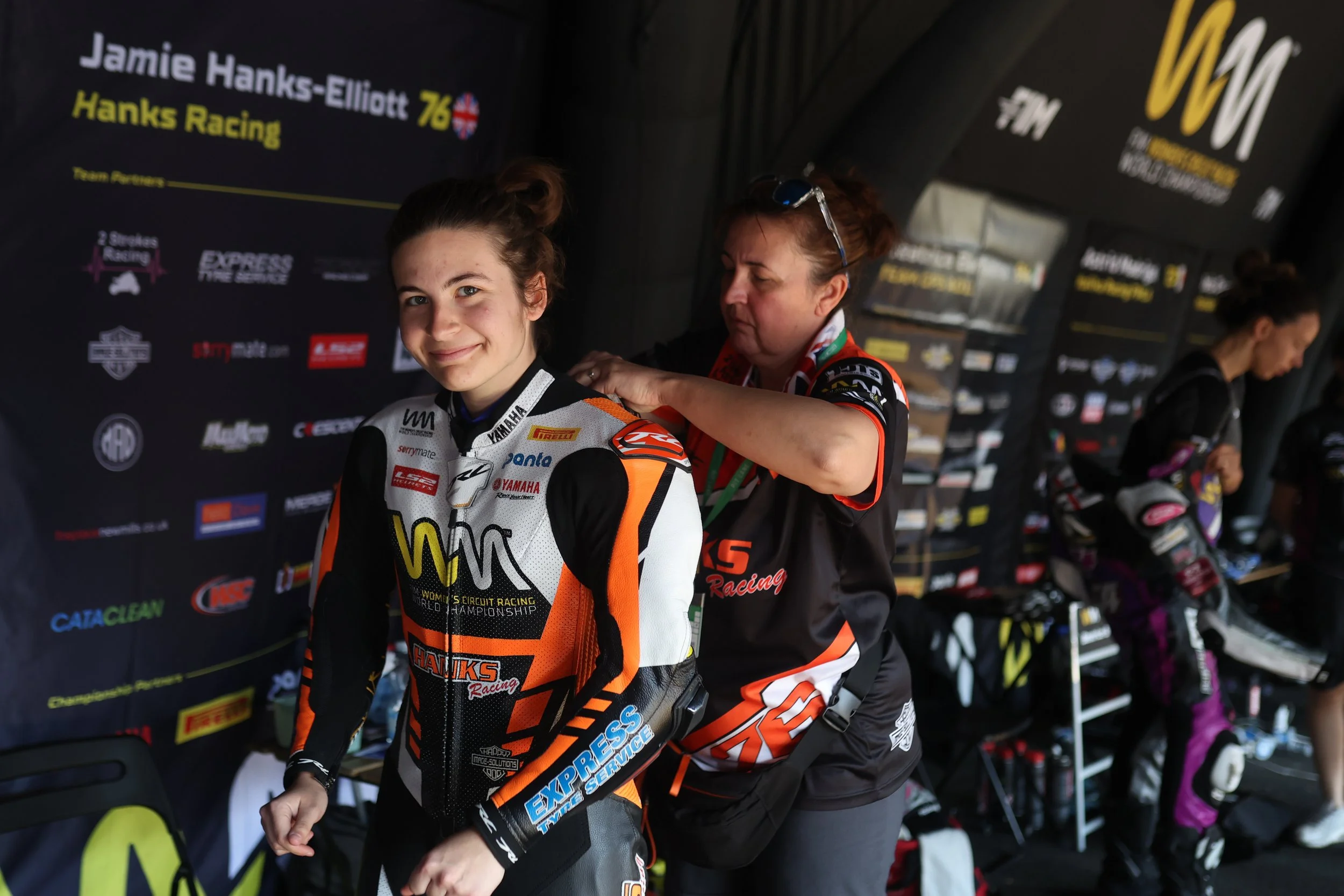
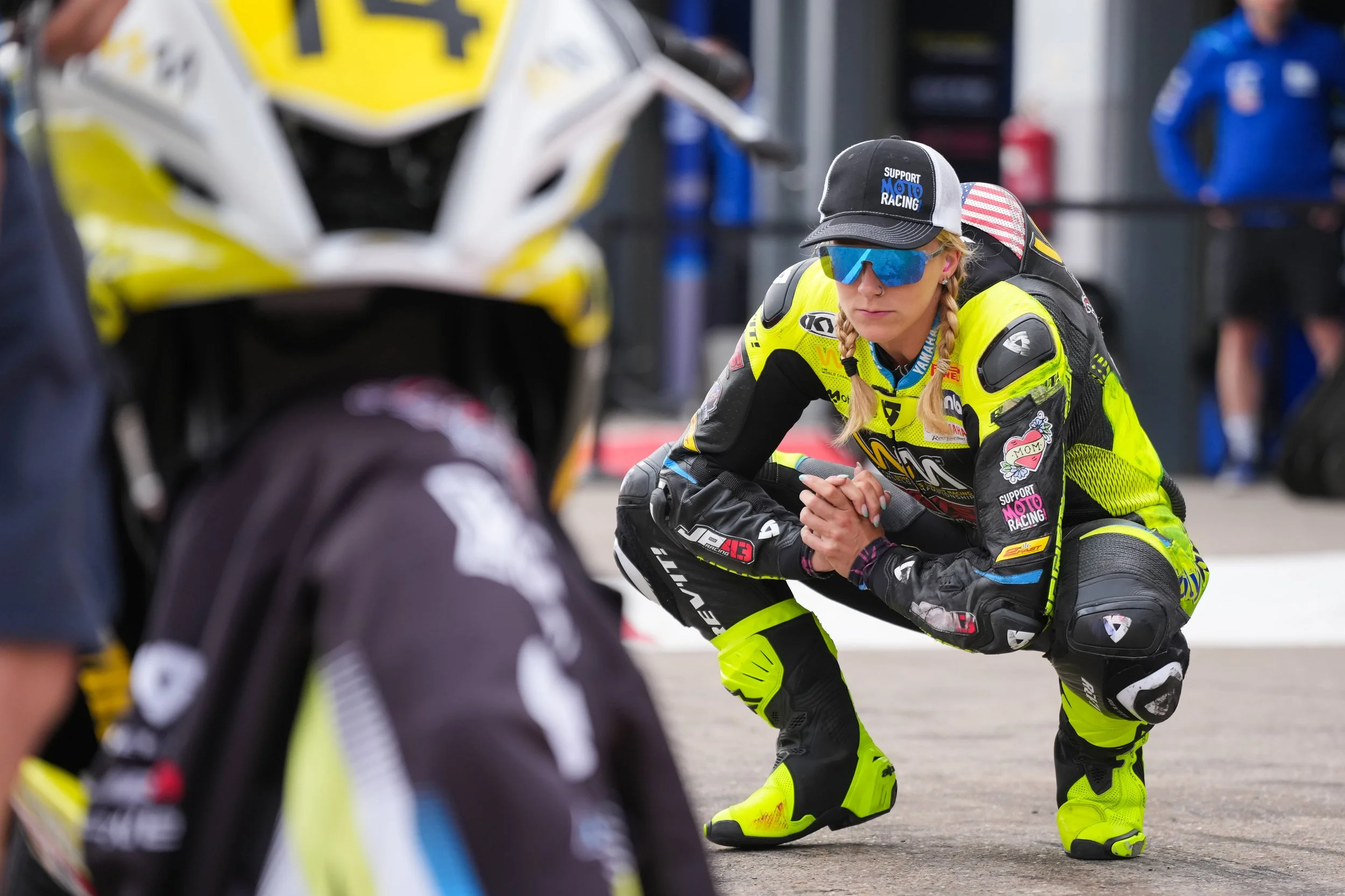
Jamie alongside her mum in the WorldWCR paddock: her earliest racing inspiration, and a constant presence throughout her career
Back home
That mindset is precisely what brought her back to British Superbikes (BSB) for 2026 – signed to Rev2Race Racing Academy for the new Junior Sportbike National Championship, one of BSB’s development classes.
She’s competing in a mixed field again, on a Yamaha R7 – though this time against other manufacturers, rather than on the single-spec bikes used across the WorldWCR grid.
Her family are still fixtures at her races, in a paddock that feels like home.
“My grandad comes and watches, and so do my mum and dad,” she says. “I’ve got a twin sister as well, so she comes along too.”
Motorsport has always been a family affair – this year, her team has felt part of that circle too.
“I’m so grateful for the opportunity I’ve had with Rev2Race,” she says. “My riding’s improved dramatically – they’ve really allowed me to make the most of the knowledge around me.
“They’ve taught me a lot about how changes to the bike can affect the way it feels, and I’ve got a lot better at giving feedback – something I’ve struggled with for years.
“I’m going into the final weekend 13th in the championship, and I’ve had just one non-scoring race all year. I can’t wait to take everything I’ve learned into the last round and 2027.”
““I’m so grateful for the opportunity I’ve had with Rev2Race. My riding’s improved dramatically.””
In time
That progress on track is also shaping how she thinks about her long-term impact.
Jamie would like to build a coaching academy eventually, modelled around the advice she wishes she’d had herself when she was starting out.
But she’s wary of overstating her own motives.
“I only do this because I enjoy it. And if it inspires girls – brilliant. But I’d never try to force something and say, ‘She races because I race.’
“I just had my mum to look up to when I was younger. I was always like, ‘Oh, my mum raced, so that means I can race too.’”
Mum showed her what was possible, but the benchmark today is entirely her own.
“I think that sits above everything else – above battling against other people. It’s battling yourself. Because at the end of the day, it’s only you and you. You and the bike, pretty much.
“I’ll know when I don’t enjoy it anymore,” she adds. “But right now, I know I’m exactly where I’m meant to be.”