Feel for it
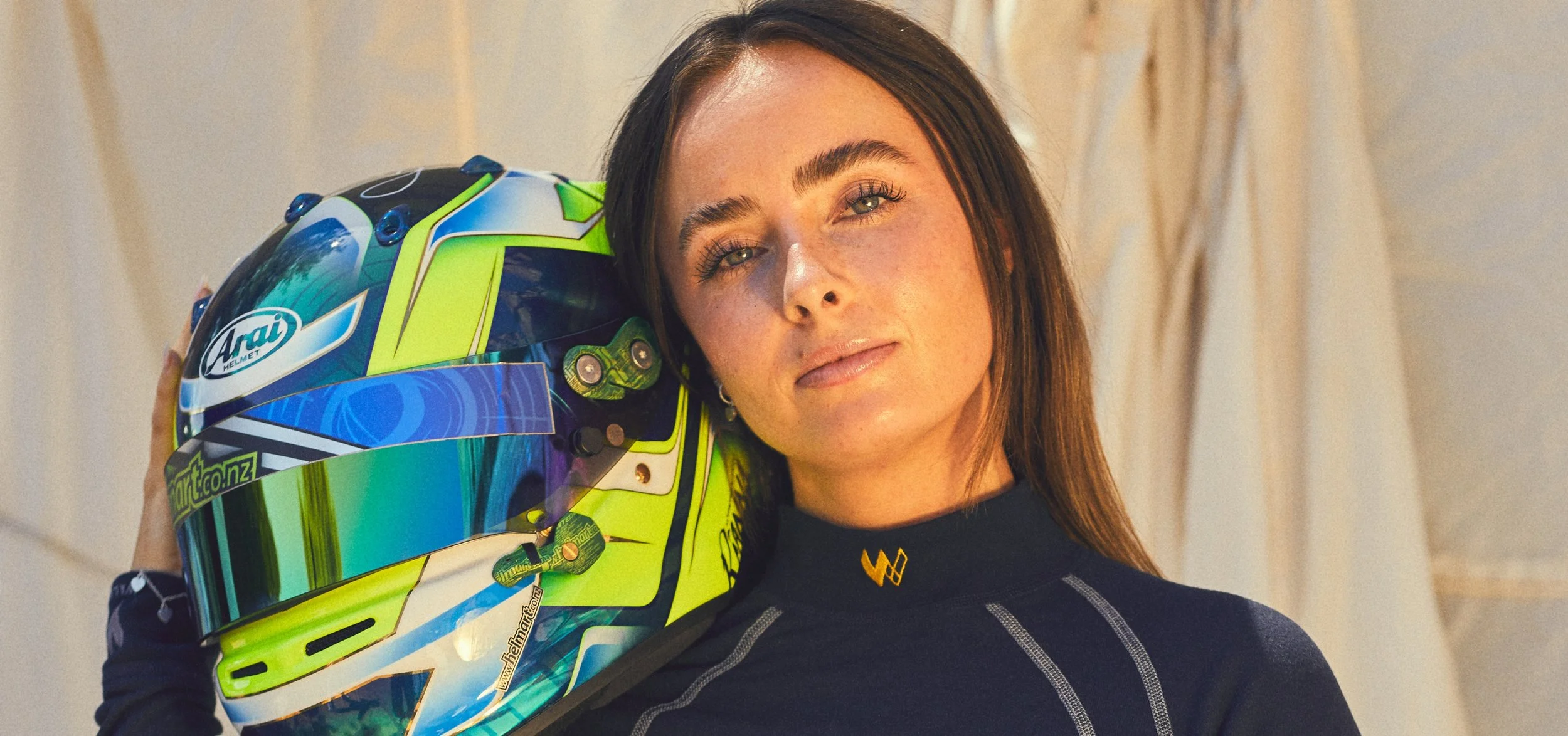
Rianna O’Meara-Hunt can’t watch a lap of onboard footage and picture herself through the corners the way most racing drivers do. Instead, she feels her way around a track for the first time and trusts what her body tells her.
It’s a method that’s taken her further than most: a historic all-female win at the Indianapolis Motor Speedway, a place on Aston Martin’s driver academy, and now, a global, all-electric powerboat series she’d barely heard of a year before she was racing in it.
Speaking to The 1v1 Project, she reflects on the dyslexia that rewired the way she learns a racetrack, the philosophy that took her from local kart circuits to a world championship on water, and why her pursuit of the 24 Hours of Le Mans is about so much more than the record books.
“Trust your instincts,” she says. “I always go out and have to trust what I’m feeling. It’s the only way for me.”
That instinct started somewhere much smaller – on a go-kart track outside Wellington, her hometown.
Safest place
Rianna didn’t grow up in a racing family. It was her dad’s accountant – on the books for his business, and an amateur racer – who suggested they go halves on a Mini Challenge car, just for fun.
Rianna, then around four, came along for the ride.
“I wanted to be on the pit scooter. I wanted to be in the car cleaning it. I just wanted to be involved in any way I could,” she says.
That same accountant raced karts at the family’s local Wellington club, and eventually suggested Rianna try it herself. Her parents waited until she was eight.
When they finally took her to watch a club day, there happened to be a kart for sale. She had a go. By the evening, it was hers.
“We didn’t stop from that day on,” she says. “I absolutely loved it from the moment I stepped into the kart.
“I loved the challenge, I loved the speed, and I loved the adrenaline.”
Only two other girls raced at her local club – but unlike the classroom, the track never once made her feel like she didn’t belong.
“From a young age, it was always the place I felt safest. The most myself, the most confident,” she says. “Whereas at school, I always struggled. I always passed, but barely.”
““It was always the place I felt safest. The most myself, the most confident.””
Believe it first
At the height of her karting career, Rianna was racing 49 weekends a year across New Zealand and Australia – often flying home at midnight on a Sunday, then heading straight into school on three hours’ sleep.
She spent around five hours a week in tutoring just to keep pace with what she’d missed.
“It was a tough balance,” she says. “But it taught me what hard work means. It gave me that extra drive to not give up when things get tough.”
On the track, at least, nothing was lost in translation.
“I never really felt like I fitted in at school,” she says. “But I created a family in motorsport. We’d all grown up together from eight years old – my confidence came from being around people who believed in the same thing as me, and knew what was possible.
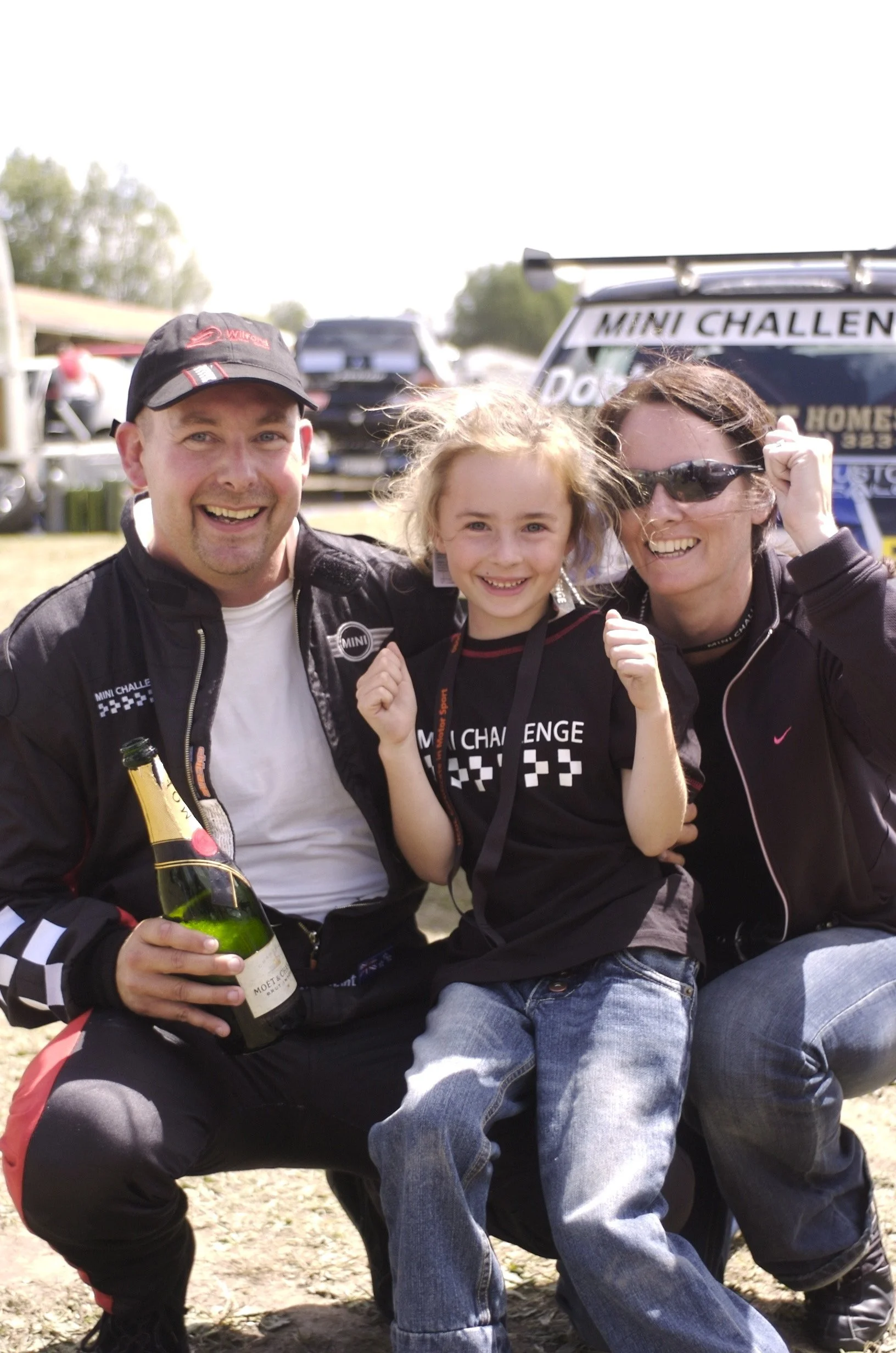
Rianna with her parents, who backed her journey from Wellington kart tracks to the global stage
“It also came from proving to myself that I could perform under pressure. If I had a bad race, if I let somebody pass, that was on me. If I made the last pass and won – yes, the car was set up well, my mechanic and I had done our jobs – but I still had to be the one out there making the moves.
“You have to be the one who believes in yourself, because if you don’t, nobody else will.”
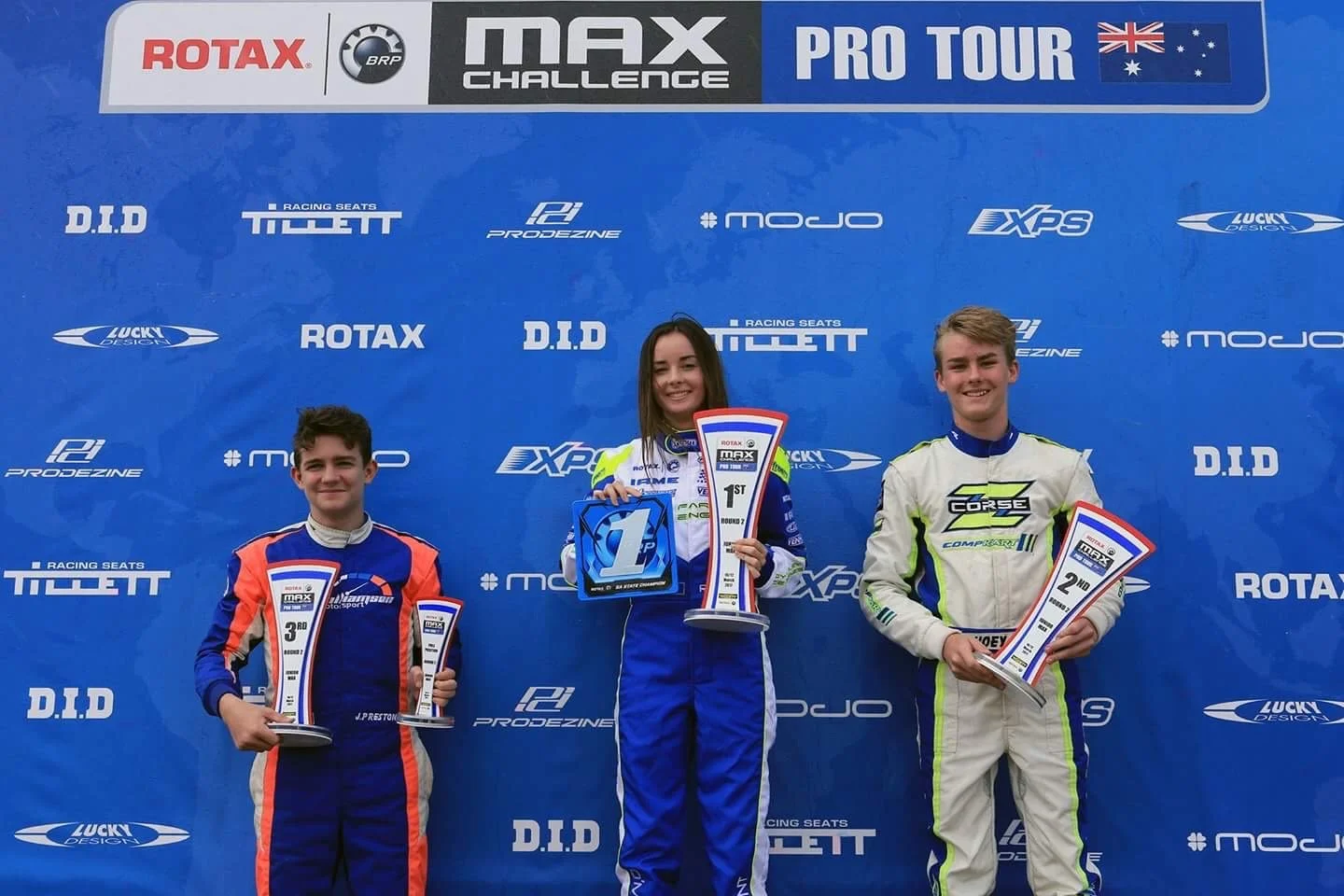
At 16, racing her first season in Australia, that self-belief had somewhere concrete to land. She became the first female junior to win a state title.
“It kind of really clicked then. It was just the feeling that I could make history at 16, that I could do something no one else had done before,” she says.
“That was the moment I really felt I was putting my time and energy into the right thing.”
““I created a family in motorsport.””
Saying yes
In November 2022, with barely a year of car racing behind her – a season in the Toyota GR86 Championship New Zealand – Rianna entered The Heart of Racing’s worldwide female driver shootout in America, expecting little to come of it.
Of the 110 women who applied, Rianna was one of nine invited to compete.
The shootout took place over two days at the APEX Motor Club near Phoenix, Arizona – an intensive trial where the finalists, sharing several Aston Martin Vantage GT4s, were evaluated not just on outright pace, but on coachability, how they engaged with data, and how well they gelled with the team.
The plan had been to pick just one winner. Instead, two stood out: Rianna and Hannah Grisham.
Almost overnight, the pair were racing together in the 2023 GT4 America Series – an endurance format where two drivers share the car and execute mid-race pit stops in 60-minute sprints.
Rianna would arrive on a Wednesday, practise Thursday and Friday, race all weekend, then fly home Sunday night to do it again the following month.
“I was showing up to each race weekend, never having raced the tracks before, learning a completely new car,” she says. “It was a year of soaking up as much as I could from the team and the pro drivers around me – it’s something I’ll never forget.”
‘Rianna, that’s P1’
That steep learning curve all came to a head at the world’s most famous speedway for the season finale.
With a chequered flag closing in, Rianna was behind the wheel at Indianapolis in a car she barely knew, on a track she’d never driven.
Storms had wiped out both her test sessions, leaving her with just three laps of practice before qualifying. Then, in the pit stop that put her in the car, the safety net meant to protect her head in a crash wouldn’t latch.
“I remember looking at the clock, and it just kept getting closer and closer to zero,” she says. “By the time the door shut, we were a second over.”
That cost her team crucial time. She pushed hard to make it up – and with five minutes left, her engineer delivered the news: they were P1. She just had to hold the gap.
With two laps to go, and the cars closing in behind, her concentration cracked.
“I was literally shaking,” she remembers. “I missed my braking point. I had to hit the brakes hard, straight into the ABS, and slow the car down. That last lap, I had to make sure nobody passed.”
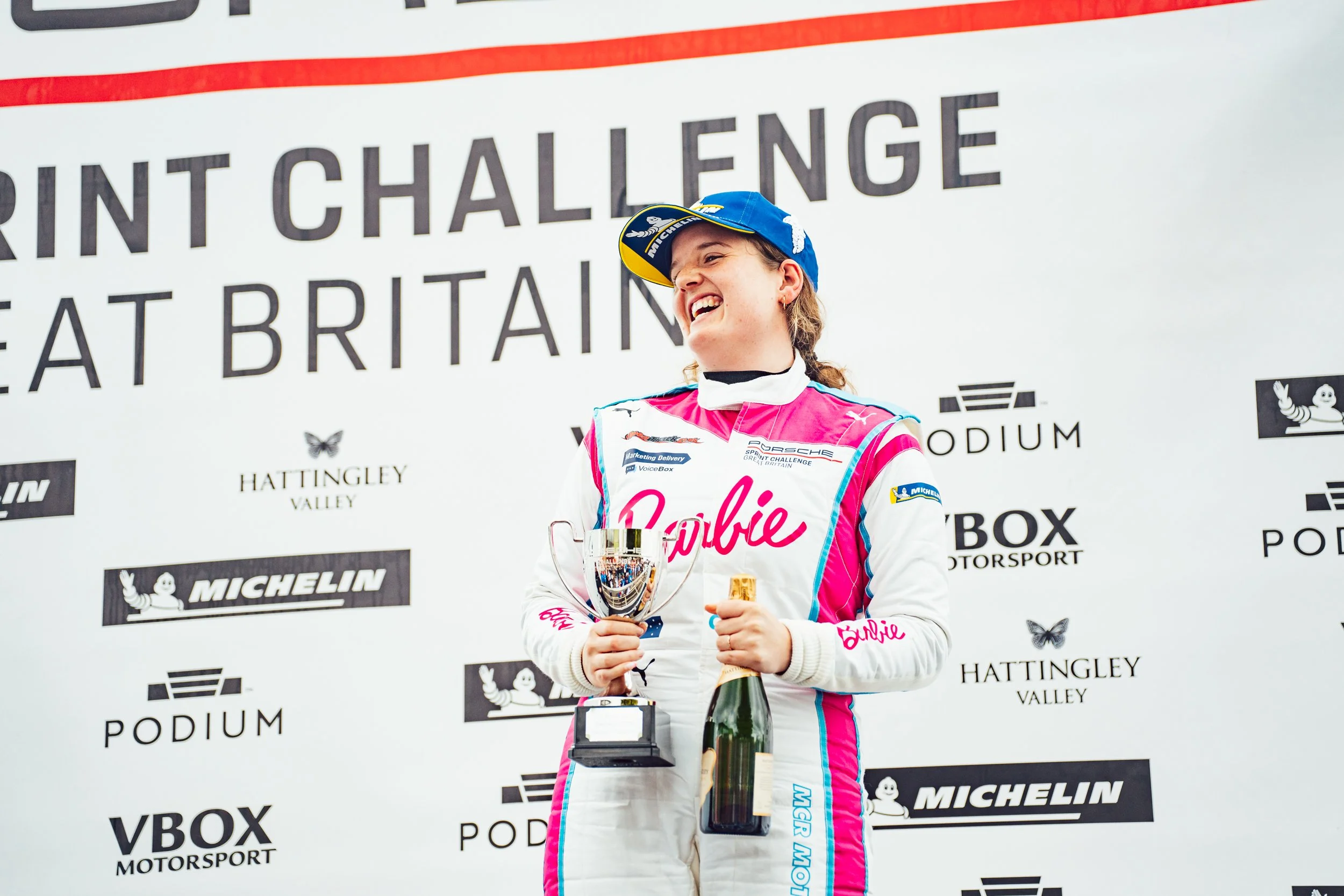
She crossed the line. “Rianna, that’s P1,” she heard over the radio. But it was only afterwards, when Aston Martin arrived with champagne and a trophy, that she realised what she and teammate Hannah had actually achieved: becoming the first female pairing to win in the GT4 Vantage.
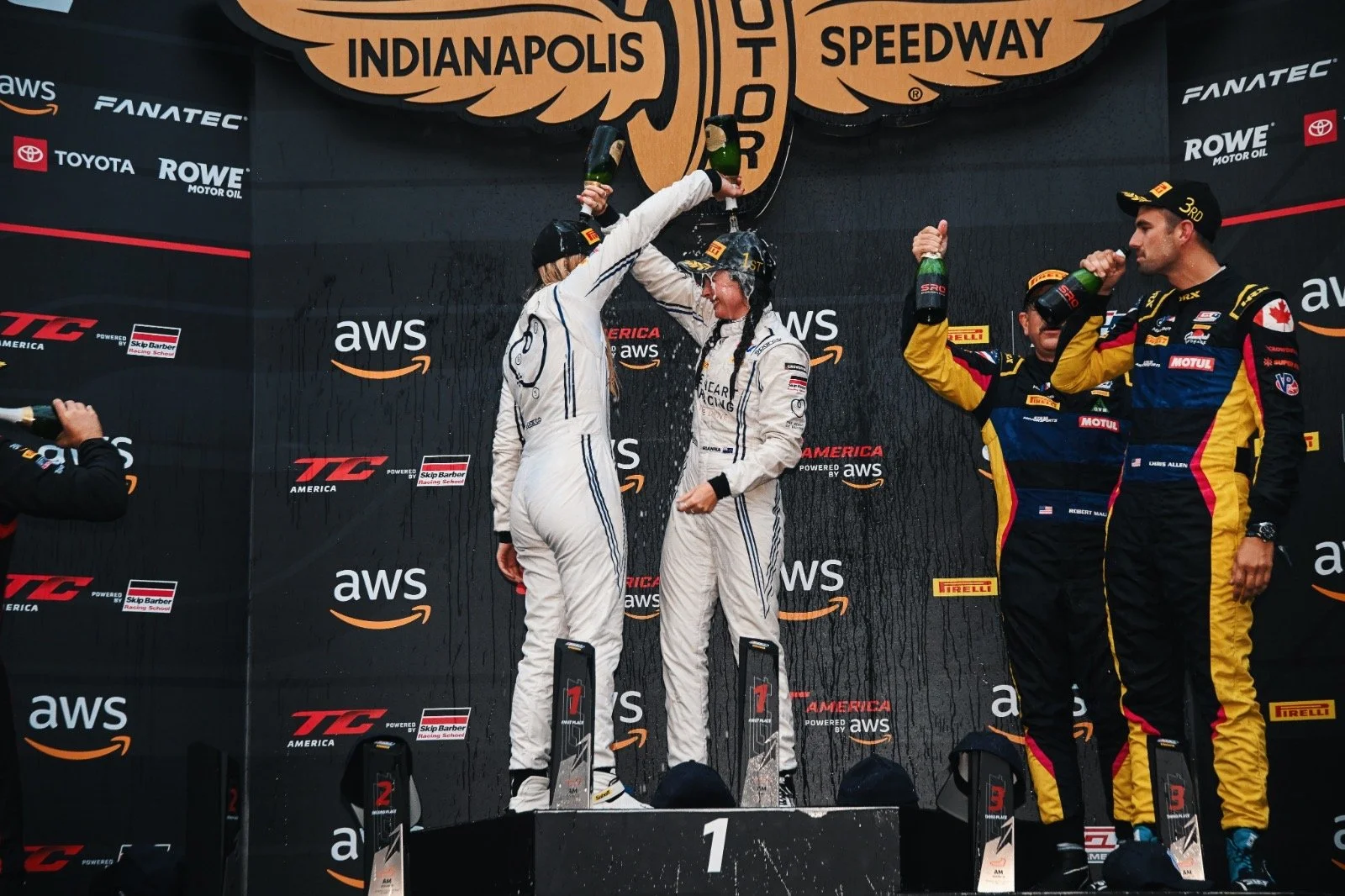
Rianna (right) with teammate Hannah Grisham after their historic weekend at Indianapolis in the GT4 America Series
It was one of two victories that weekend – Rianna and Hannah swept the Indianapolis finale entirely, sealing the season on the highest possible note.
“It was really, really cool,” she says. “Every race brings its own quirks and character. This one was definitely special.”
With that experience behind her and a UK passport available through her father, Rianna was then accepted on to Aston Martin’s Racing Driver Academy in 2024 – a programme based in Oxfordshire that gives rising talent factory data, simulator training, and mentorship from full-time drivers.
Within two weeks, she’d packed up her life in New Zealand and moved.
“I just went,” she says. “I think it was the best decision I could have made. You never know where a conversation, or an opportunity, is going to lead.”
““Every race brings its own quirks and character. This one was definitely special.””
Off four wheels
That philosophy has since taken Rianna somewhere she never expected: off four wheels entirely.
In 2025, a message arrived through Instagram asking if she’d like to get licensed for the E1 Series – the world’s first all-electric foiling raceboat championship, where every team pairs a female and male pilot.
She’d never heard of it, and initially thought little of the message.
“An engineer I’d worked with before called and said, ‘You should reply,’” she says. “So I did.”
She spent that year as a reserve pilot for Team Drogba, travelling to every round in case she was needed. This year, she was called up just days before the season began, when one of the championship’s female pilots became unavailable.
“I was like, ‘Oh my god, okay – I actually have to get in the boat now,’” she laughs.
Her team finished third on the water in her first outing, only dropping to fifth after a penalty – enough to contribute to a full-time seat with Team Miami for the rest of the season.
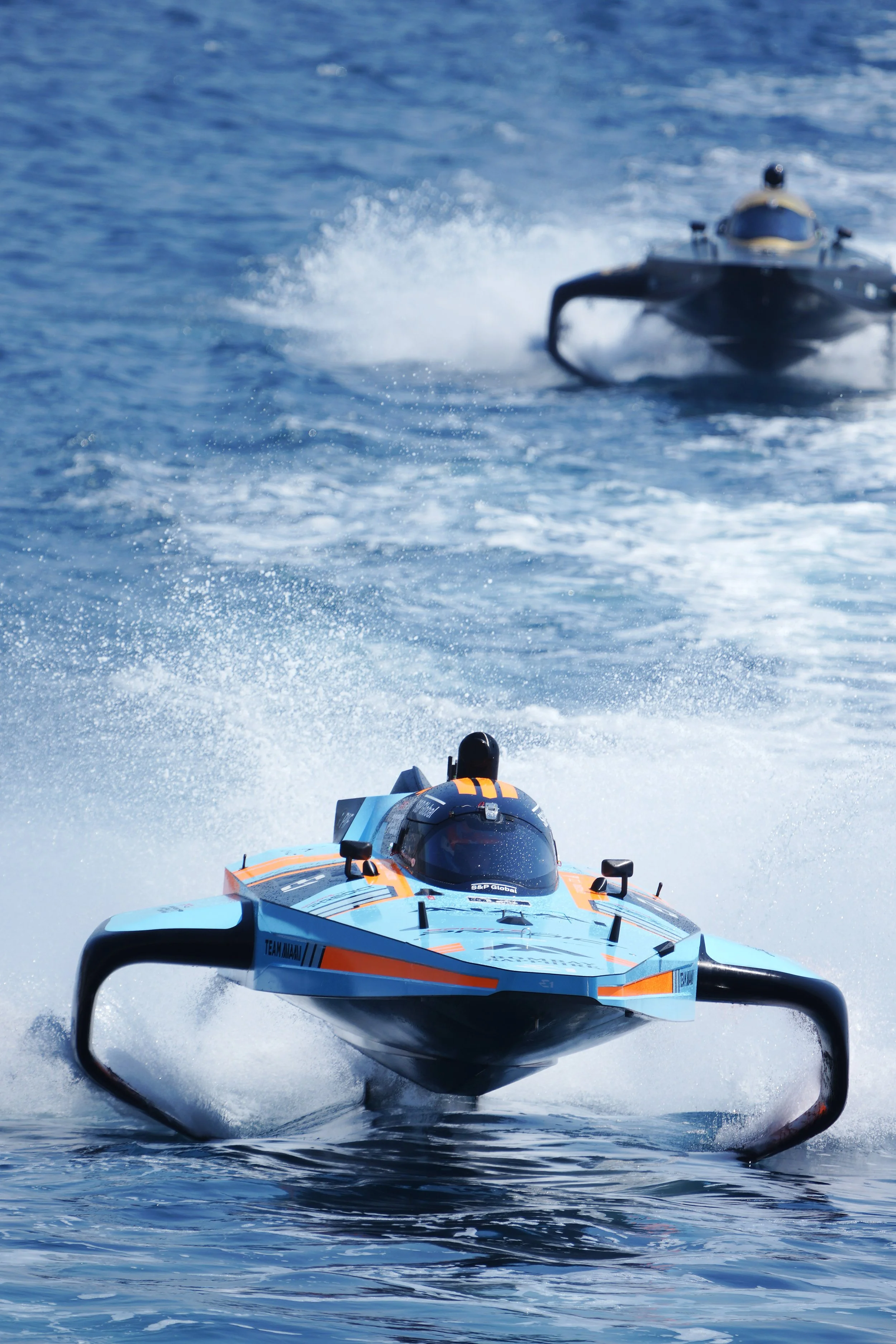
Rianna spent 2025 as a reserve pilot for Team Drogba in the E1 Series before a full-time move to the water in 2026
The adjustment was almost total.
Electric steering offers barely any physical feedback. The sea shifts by the second – waves, currents, the wake of a passing commercial boat all changing the handling underneath her. And then there’s the heat.
“In Monaco, it was 38°C outside,” she says. “Inside the boat, it was nearly 50°C. That’s honestly the hardest part physically – it’s hotter than anything I’ve ever driven in.”
Finding her feet on the water took longer. Choppier conditions early in the season caught her out – until that same Monaco weekend, when she spotted something in a rival’s onboard footage during qualifying: not a corner or a line, but a technique the faster boats were using that her team wasn’t.
“I said to the team, ‘We need to try this, because every fast boat is doing it and we’re not,’” she says.
They changed their approach overnight. The next day, they were among the quickest boats on the water.
““You win and you lose together.””
Drop the ego
That instinct for reading a situation matters even more given how Rianna learns – or rather, doesn’t learn – in the way most drivers do.
Being visually dyslexic means she can’t watch onboard footage of an unfamiliar track and memorise where the next corner comes. Data and video help once she’s physically driven a circuit; a force-feedback simulator helps before she arrives.
But mostly, she relies on feeling.
“I feel where the car is on the track, and I know what that corner feels like once I’ve gone through it,” she says.
That makes trust – in herself, and in the people around her – essential.
“If my engineer tells me I need to brake 20 metres later, I’ll brake 20 metres later, because I trust what they say,” she explains. “And if I come in and say the car’s understeering on the longer corners, they have to trust that too, then adjust it.
“A driver and an engineer have to trust each other, because if you don’t, you’re both never going to progress,” she adds. “I want everybody around me to know where I need a bit of extra help, because then we’ll all get to the same result faster.
“We’ve got to be open about our strengths and our weaknesses; everybody has to drop the ego and work together.”
It’s an ethos that matches where she ultimately wants to end up: the 24 Hours of Le Mans.
“I like being able to not just race for myself, but with a whole team of people who are just as excited for what’s about to happen as me,” she says.
“You win and you lose together.”
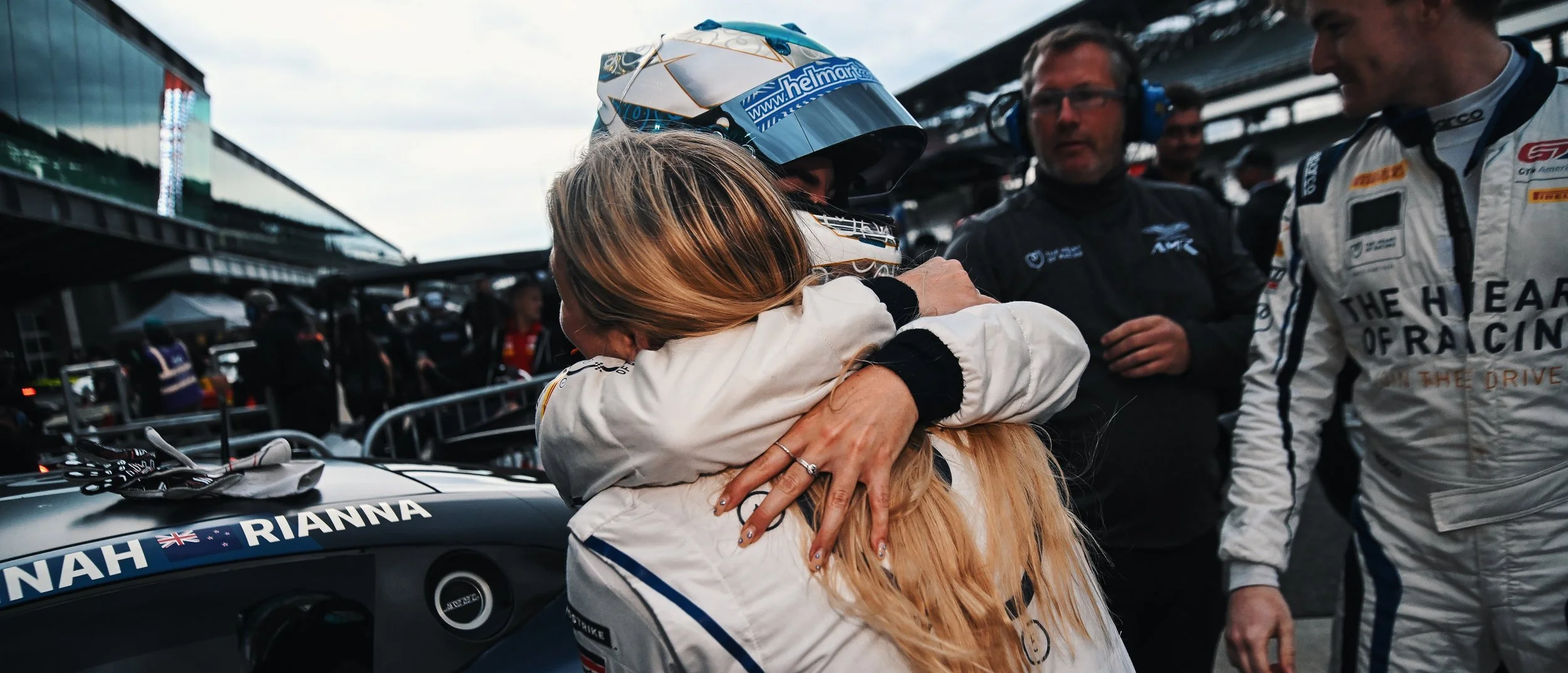
Rianna and teammate Hannah Grisham celebrate after making history at IndianapolisThe wider pathway
No female driver from New Zealand has ever competed in the 24 Hours of Le Mans.
Rianna is aiming to be the first.
“I’ve created history for women in motorsport three times already,” she says. “It’s something I can back myself to do again, with the right people and team around me.”
In 2017, Rianna became the first junior female to win an Australian Rotax State Championship. In 2023, she became the first female pro driver and track instructor hired for the Tony Quinn-owned motor racing circuits in New Zealand. That same year, she added Indianapolis to the list.
But she frames her next goal as bigger than another entry in the record books.
Rianna wants young girls – particularly those without any connection to motorsport, the way she once started – to see a pathway rather than a closed door.
“Whether they live in New Zealand and don’t think it’s achievable, or they live in Europe and only know motorsport through TV – I want to inspire them to give it a go,” she says.
“If you love it, if you’re passionate, you should absolutely go for it. But you need to see what’s possible.”
Rianna has made a conscious effort to highlight the various roles available to girls and women in motorsport, showing the next generation what’s possible
That includes encouraging more girls and women to see themselves as engineers, mechanics, commentators – anywhere in the sport.
It’s a landscape Rianna’s watched shift, gradually, over the course of her own career.
“When I started, dads would tell their sons they’d let a girl beat them,” she says. “People would come up to me and yell, ‘Why did you do that?’ I was 13 years old.
“It’s definitely got more positive since. But there’s still a lot of sexism and opportunities missed just because you’re a female in the sport.”
The other barrier, she believes, cuts across gender entirely: money.
Too many talented drivers – women and men – disappear before they ever reach the categories that could make their careers, simply because junior racing rarely offers sponsors an immediate return.
“Maybe what sponsors get out of it early on is a story rather than a return,” she says. “But that’s the point – if you back someone through GT4 and into the bigger stages, that’s when you’ll start to see the return on the investment.”
““I’m just a girl from New Zealand who lived halfway around the world and somehow got here.””
Give it everything
If Rianna could speak to the eight-year-old climbing into her first kart in Wellington, she wouldn’t tell her to work harder.
She’d tell her to believe in herself sooner.
“I don’t think I quite believed in my own capability, or wanted to admit to myself that I thought I was capable,” she reflects.
“I should have done it all sooner – I put it off for a few years. I’d just urge anybody to follow their gut, and go as soon as you feel that spark.”
That mentality has carried Rianna from a small Wellington kart track to world-class circuits across Australia, America, Europe, and now the open water.
“Just go for your goals,” she says.
“No goal is too big if you’re willing to put the work in. You need to believe in yourself and come in with confidence. I’m just a girl from New Zealand who lived halfway around the world and somehow got here.
“There’s still a long way to go for me. But I truly believe that if I didn’t have the right people around me, and the self-belief I have now, I wouldn’t be where I am today.
“Be confident. Be yourself. And give your goals absolutely everything you’ve got.”