Racing through doubt
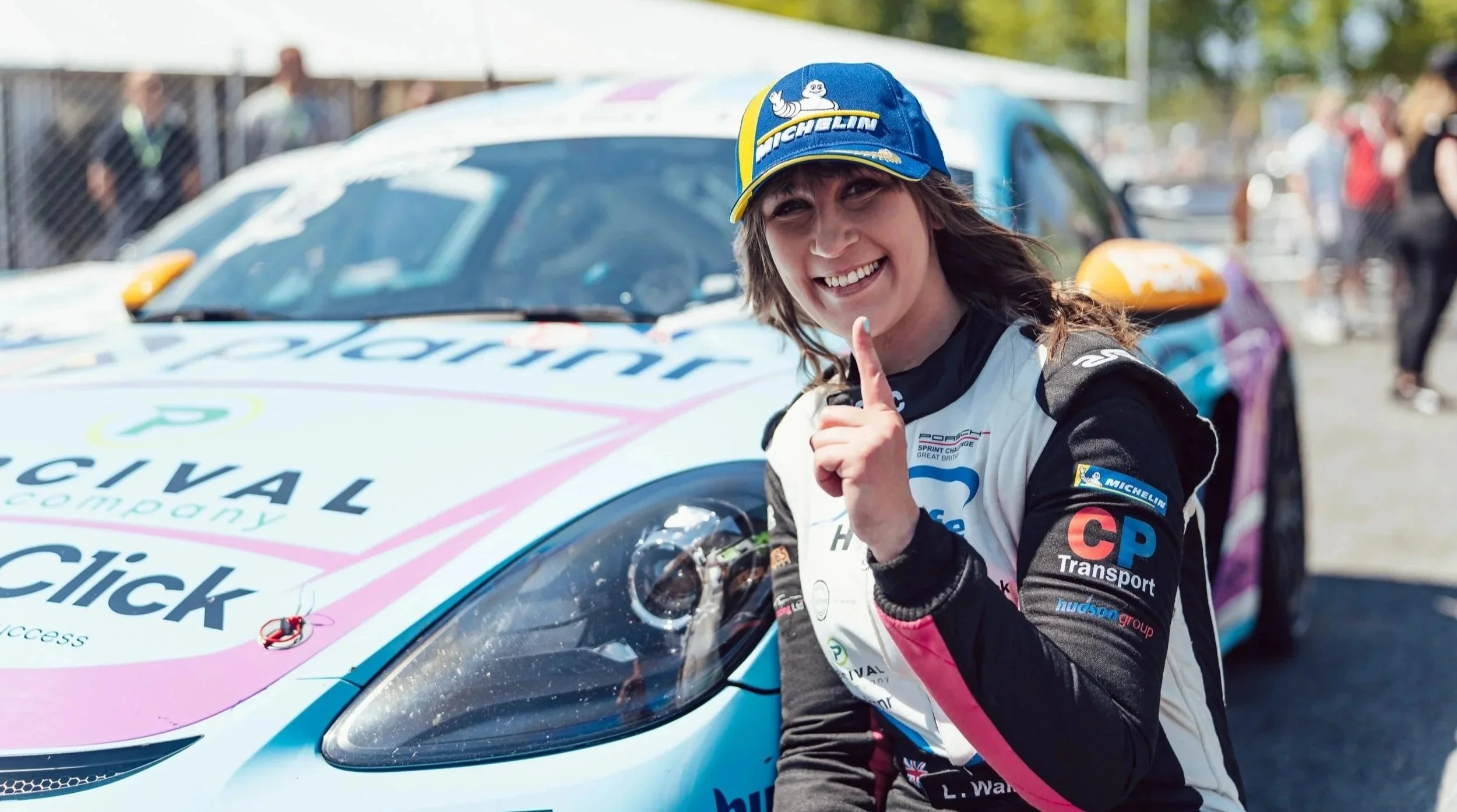
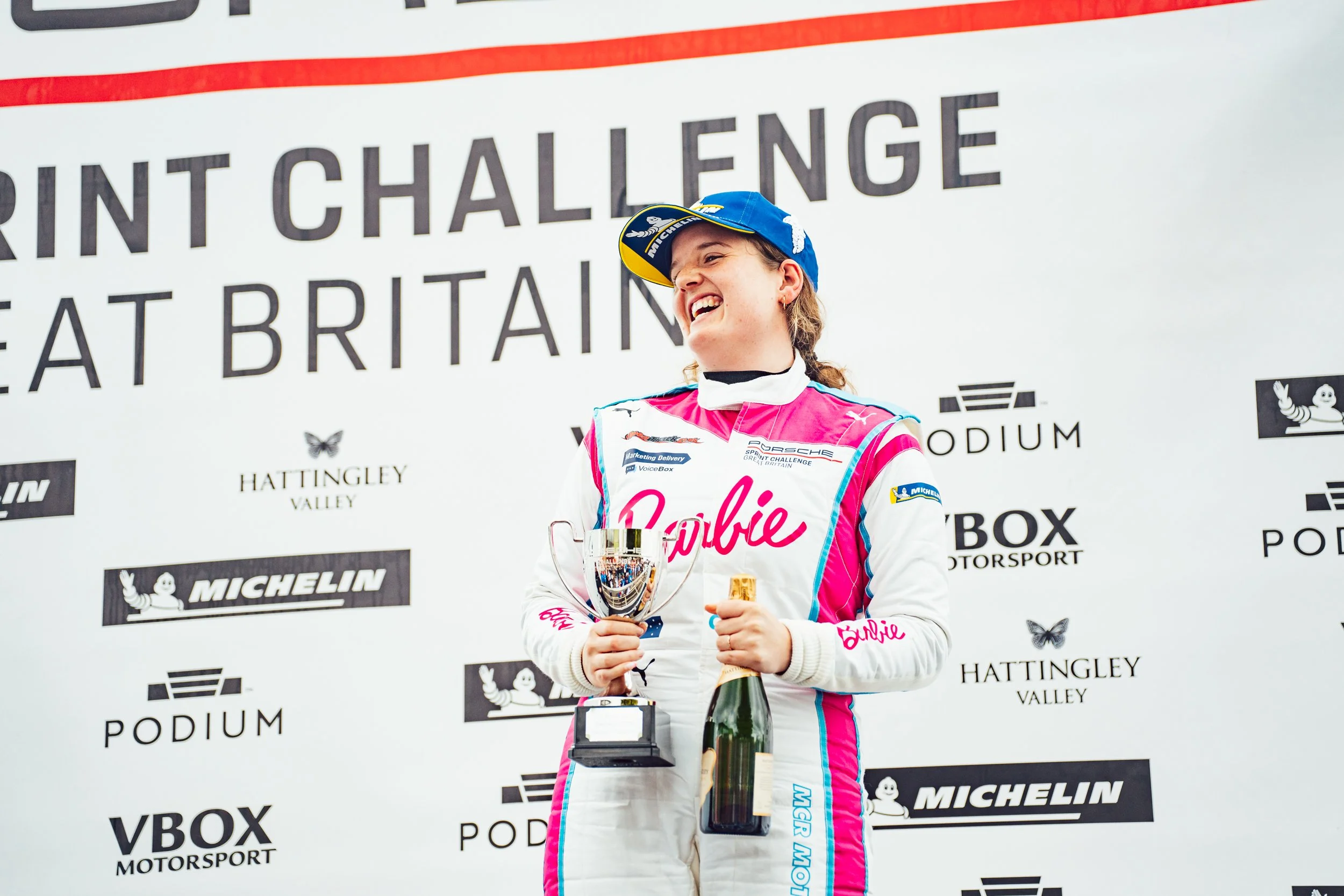
As the then youngest driver on the Mini Challenge grid and the first woman to achieve a JCW podium finish, Lydia Walmsley has already made history in British motorsport.
In 2025, she stepped up to the Porsche Sprint Challenge GB series, moving to a much faster, more powerful car – her biggest technical leap yet. But for someone who’s spent years pushing boundaries on track, her toughest challenges have rarely been with other drivers.
Speaking to The 1v1 Project, Lydia reflects on the accident that nearly ended her career at 10 years old, the financial pressure that shapes every decision behind the wheel, and the ongoing fight with self-doubt – a battle she’s learning to win by believing in the driver she’s become.
“I could win a race and find a reason why that isn’t positive,” Lydia reveals, “like someone else had a problem that meant I gained a position. I’ve always struggled with my confidence. Believing in myself is the hardest part of it all.”
In motorsport, where split-second decisions define success, this kind of self-doubt is more than uncomfortable – it can be limiting. Yet Lydia has learned to manage it, carefully building the inner belief that racing at this level demands.
“Trying to turn that doubt around in your brain and realise you actually did an alright job – that’s been my biggest problem,” she reflects. “But I’m definitely a lot closer to 100 per cent confidence than I was five years ago, which is good. I’m working on it.”
““I’ve always struggled with my confidence. Believing in myself is the hardest part of it all.””
Family affair
Lydia’s entry into motorsport started at home.
Her dad raced oval circuits – short, high-energy tracks where the action is always in view – and when seven-year-old Lydia showed interest, he took her to the famous Buckmore Park venue in Kent, England, to try karting, following in the footsteps of future F1 champions Lewis Hamilton and Jenson Button.
“I think my family thought I’d do it for two weeks and move on,” Lydia recalls. “But I quite enjoyed it, much to their disappointment. It snowballed from there.”
It didn’t take long for that curiosity to turn competitive. Within her first year of karting, Lydia was already fighting for championships, finishing runner-up in her class by only a single point.
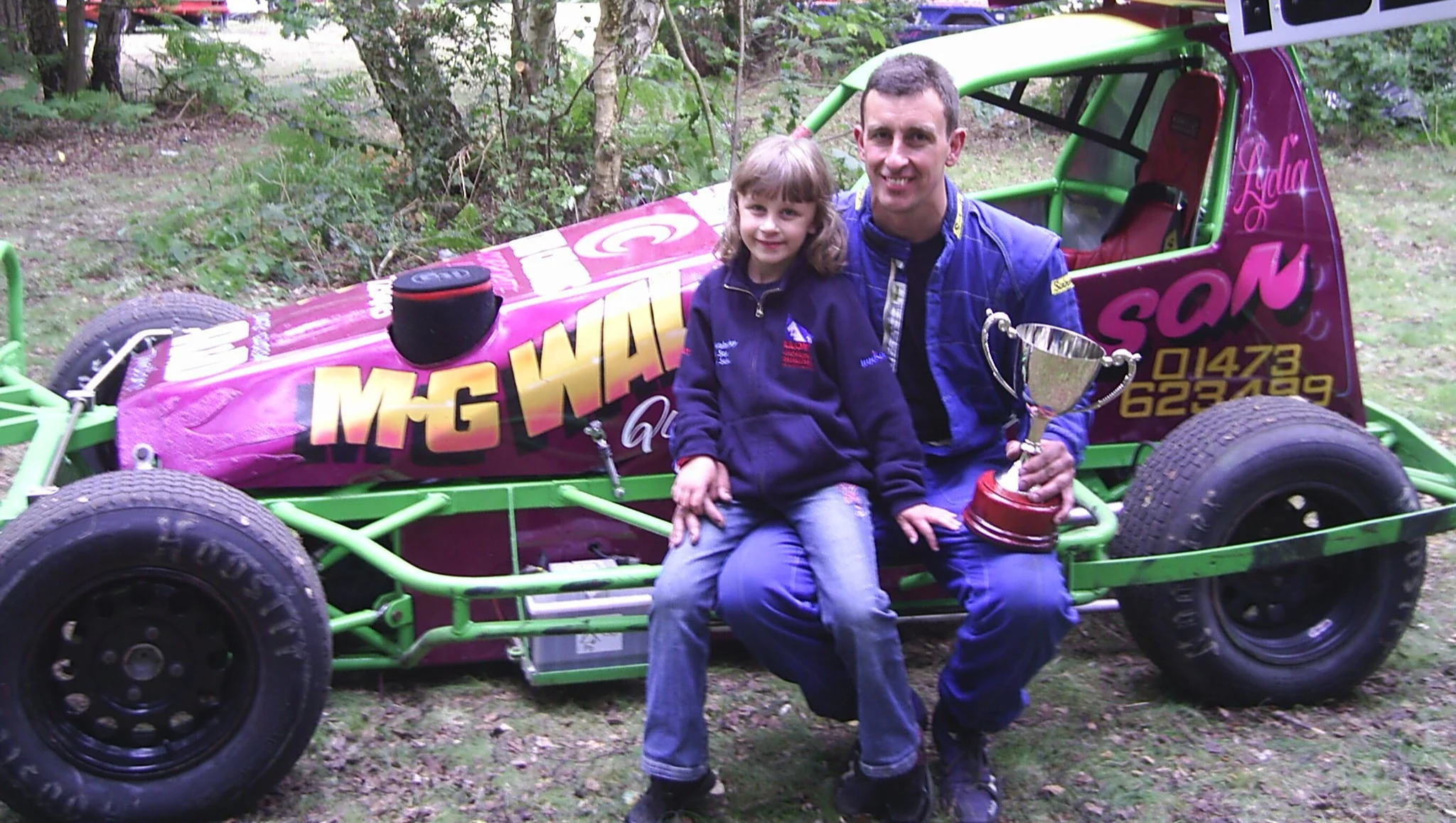
Lydia with her dad, who inspired her to start karting at seven years old
That family connection proved crucial. As a young girl, car racing wasn’t something she would have discovered on her own. Without that exposure, motorsport would likely have remained abstract, simply something other people did.
“If my dad hadn’t been involved in motorsport, there’s no way I’d have ever said, ‘Let’s go karting,’” Lydia explains. “It just wouldn’t have been a thing I thought to do. That’s why representation matters, especially for young girls – it shows you that it’s possible.”
From those early days, her dad became more than an inspiration – he built, fixed and maintained her race cars. With the exception of a couple of seasons, Lydia’s team has always been family-run, with dad sorting the mechanics and mum handling logistics.
“We jokingly call mum Head of Food and Beverages because she keeps everyone stocked up. It’s important to have that balance,” she says. “My mum’s never missed a race weekend, ever, from when I was seven to now.”
““If my dad hadn’t been involved in motorsport, there’s no way I’d have ever said, ‘Let’s go karting.’””
Facing fear
At 10 years old, Lydia faced a moment that could have ended her racing career before it really began. During only her second race weekend in her new kart, she was hit from behind on the first corner.
The impact sent her off track, where she wrapped her leg around the pedal, breaking her tibia and fibula. The tyre barrier also broke her visor, embedding rubber into her eyelid, requiring surgery.
“I was out for a long time,” Lydia remembers. “There was a point where I was like, I’m just not going to do this anymore. My parents said, ‘Look, you need to go back, even if you just do it once. That way, if you ever want to race in the future, you won’t have that fear.’”
The journey was difficult. After four months away, that fear had time to build in her mind.
“On the way to the track, I was full of worry,” she admits. “When you fall off a horse, you’ve got to get back on, but when you’ve been sitting with it for that long, it becomes so much harder.”
Once seated in her kart, the anxiety dissolved – and in no time at all, Lydia was back on the podium. By the end of the season, she’d been named Young Driver of the Year.
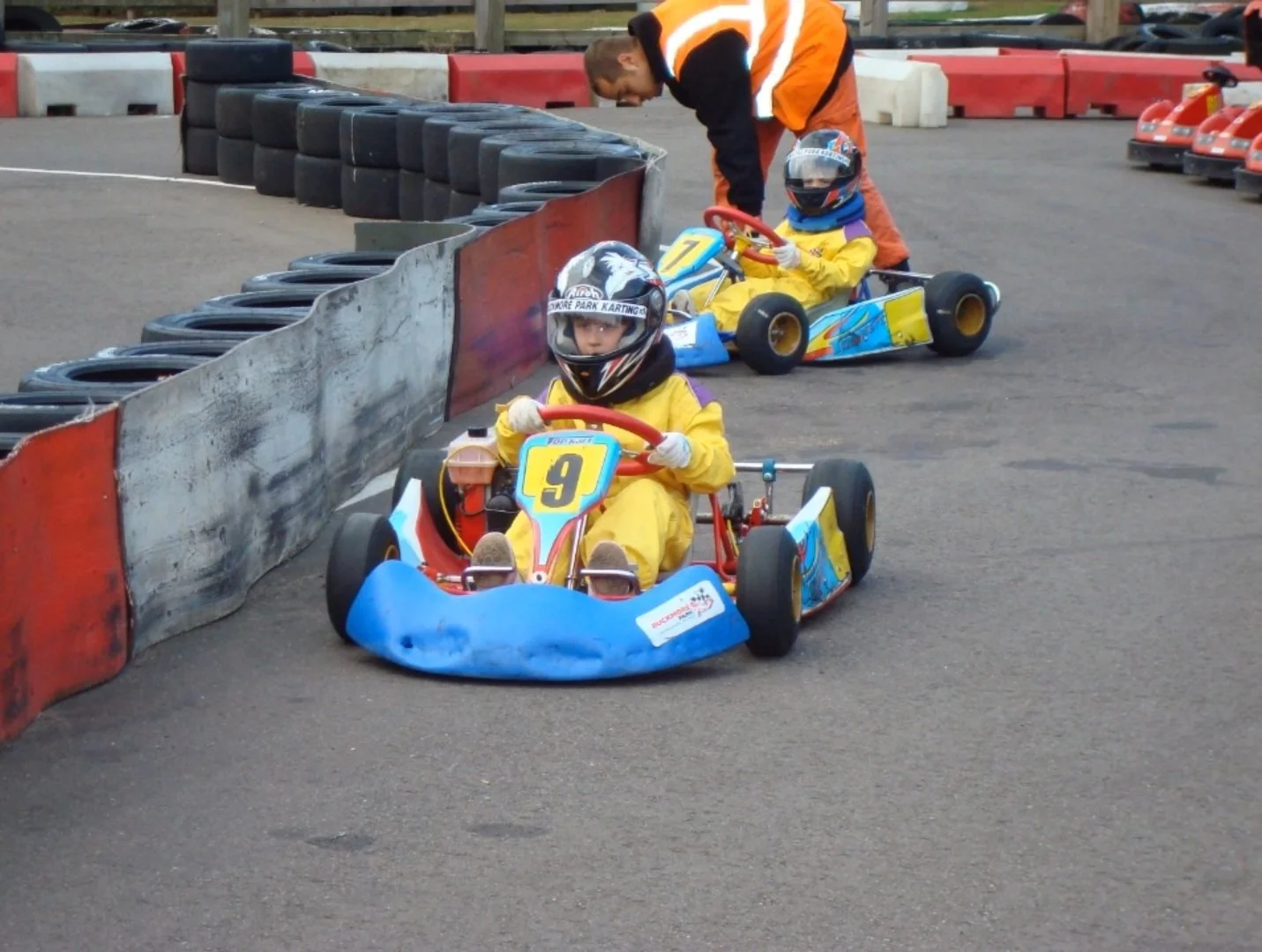
Lydia in her early karting days. A serious accident at 10 left her with broken bones and doubt – but she returned to claim Young Driver of the Year that same season
Guided by that early experience, Lydia maintains a measured perspective on risk. She knows the dangers are real – currently racing at speeds upwards of 140mph, the stakes are high. But she also knows that fear can’t be allowed to interfere.
“If you had fear, you wouldn’t be able to do it,” she explains. “The brain really is the most important part of racing. If your brain’s not in it, you could be the best in the world with your hands and feet, but you’ll never perform well.
“You just can’t have negative thoughts in your mind. As soon as you start worrying about what could go wrong with the car, you need to give up, because it’s too dangerous to drive with uncertainty.”
““As soon as you start worrying about what could go wrong with the car, you need to give up.””
Level playing fields
Working through that moment set the tone for what came next. Since then, her progress has been marked by meaningful milestones – and, most importantly, sustained performance.
At 16, Lydia arrived in senior racing in 2018 as the youngest driver on the Mini Challenge Cooper Pro grid, before establishing herself as a front-runner, collecting podiums, awards and top-five championship finishes.
Six years later, she broke new ground again as the first woman to stand on a JCW podium.
They’re achievements that bookend her rise, even if she views each with characteristic clarity rather than ceremony.
“I actually didn’t know I was the first woman until someone told me,” she says. “The achievement was being on the podium, not being the first woman to do it. From a PR point of view it was massive; my sponsors loved it. But for me, it’s just an enormous personal accomplishment to be standing there.”
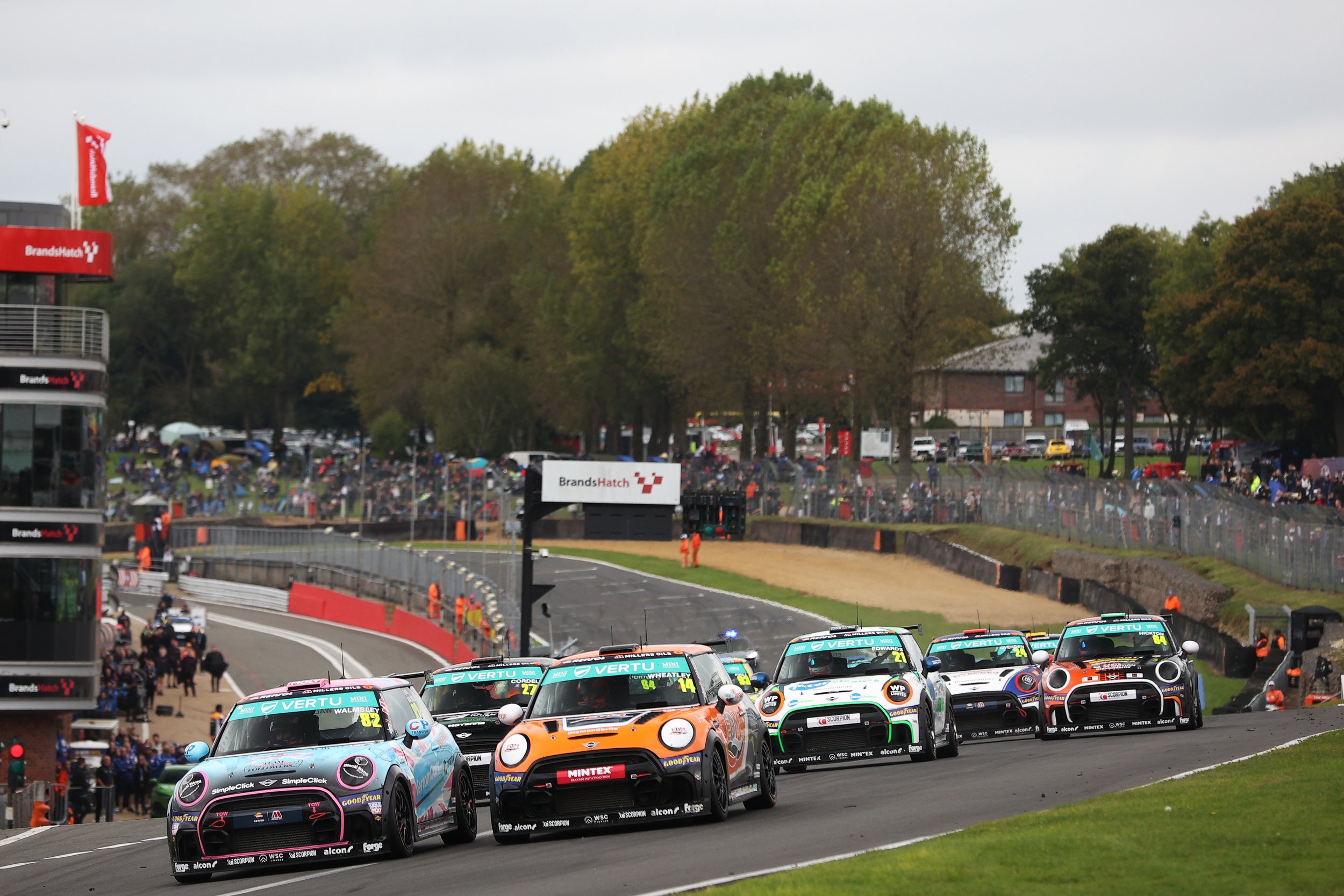
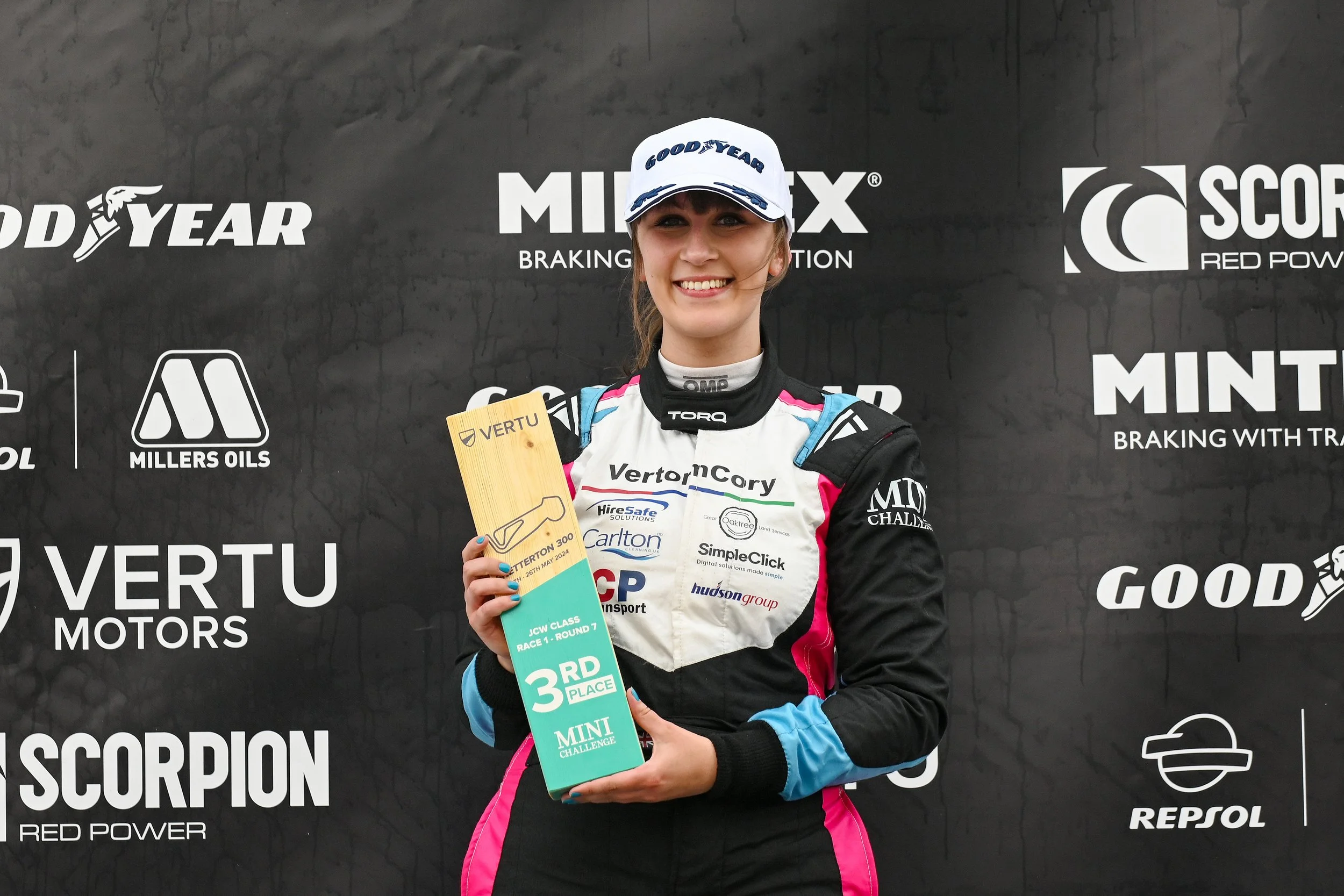
When Lydia lines up on the grid, she doesn’t see herself as a female racing driver – just another racing driver. It’s a mindset she’s maintained throughout her career, even as the number of women in the sport has grown significantly.
“When I started, I would never race against another girl,” Lydia remembers. “But now the numbers are skyrocketing. On my Porsche grid, there were four of us girls – you would never have had that five years ago.”
While she hopes her presence helps young girls view motorsport as a possibility, she takes a measured view of initiatives designed specifically for women, such as the F1 Academy, an all-female single-seater series that runs as a support category to Formula 1.
“I like racing against men,” she says. “There aren’t many sports where men and women can compete on a level playing field. I find it very empowering that we can do it equally.
“You can’t beat being on the F1 support bill, so the opportunity those girls in the F1 Academy have is fantastic. But it might be more rewarding to create a championship where teams are required to have one male and one female driver and see how they get on.”
““The numbers are skyrocketing. On my Porsche grid, there were four of us girls – you would never have had that five years ago.””
Unlearning instincts
The Porsche Sprint Challenge represented much more than just a new grid in 2025. It was her entry into Great Britain’s premier one-make GT4 series – a high-prestige category where the cars are identical, making the driver’s skill the primary variable.
For Lydia, it was a significant step forward into the spotlight of elite car racing – and a move that demanded a total reinvention of her approach to driving.
After seven years climbing the Mini Challenge ladder, she moved from a front-wheel drive, 2.0-litre Mini Cooper S producing up to 275 horsepower, to a rear-wheel drive, 3.8-litre Porsche 718 Cayman GT4 with 425 horsepower.
It was, in every sense, a car that accelerates, brakes and corners at speeds far beyond what she’d experienced before.
“Everything you’ve learned, you need to throw away and start again,” Lydia explains. “If I was doing a longer session or a race where other things were going on, I would start slipping back into front-wheel driving because my brain was occupied with something else. You forget how to do it and revert back to what’s second nature.
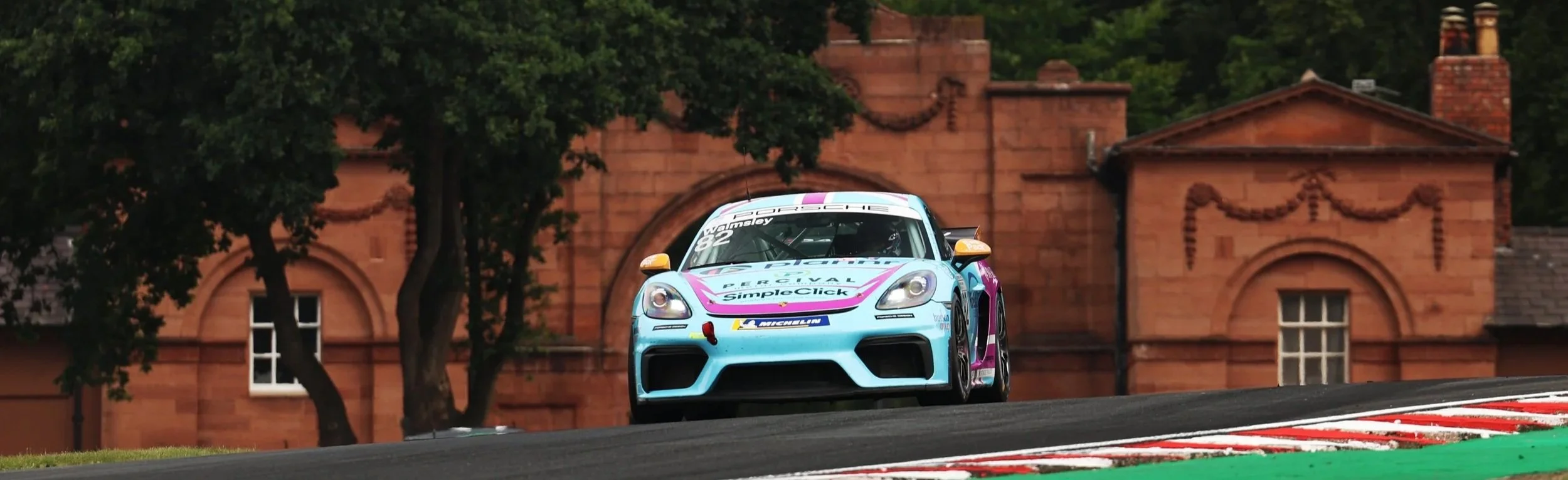
“When it’s not going well, you also try harder, which makes it worse because you slip further into the wrong way of driving,” she adds. “It’s a slippery slope.”
But with time, the adjustment became natural. Lydia describes a revealing moment in the season: taking sponsors for passenger laps and thinking the car felt slow, when a year earlier, sitting in that same seat, she’d found the speed overwhelming.
“What feels like your slowest lap is often your best,” she reflects. “If everything feels really quick, as though it’s coming at you fast, you may feel like a hero, but your brain won’t be operating in the way you think it is. It’s just not possible to think about everything at once.
“If it’s feeling quick, it’s because you’re not really sure what you’re doing. That’s changed for me with the Porsche now. Now I can think about other things: how the car feels, what to adjust. I’m not thinking too much about driving it; my instincts are taking care of that.”
““If everything feels as though it’s coming at you fast... your brain won’t be operating in the way you think it is.””
Cost of risk
Like many drivers competing outside the highest tier of motorsport, Lydia’s biggest challenge isn’t on track – it’s securing the budget to race at all.
“Racing is the easiest part of motorsport,” she says. “I wake up every morning thinking about the budget that I don’t have for next year. You can’t not think about it.”
This financial pressure creates a constant undercurrent of worry that follows her on to the grid. When she’s racing, her first thought after any contact isn’t about injury – it’s about cost.
“Sometimes I’ve not even hit the barrier yet, and I’ve thought, ‘Oh my gosh, this is going to be expensive,’” Lydia admits. “One major accident in the Porsche would definitely end my year. I’m more worried about money than my own safety, which is crazy really, but the financial part is everything.”
This awareness inevitably affects driving decisions. In qualifying, where a grid can be split by just two-tenths of a second, finding those tiny margins requires taking risks – and pushing the limit becomes harder when you’re calculating repair costs.
“To find those little advantages, you need to risk more than the other person,” Lydia explains. “It’s that simple. And if you’re worried about damaging the car, that’s harder to do.
“There are times where I’ll feel like I’m driving as hard as I can, then I’ll watch it back and think I could have done more. I won’t know it in the moment, but there will be something in the back of my mind telling me to be careful. That definitely makes a difference.”
““I’m more worried about money than my own safety, which is crazy really, but the financial part is everything.””
Small team, big goals
Operating as a family-run team in professional championships has always been challenging. The budget constraints are obvious, but there are other, less visible difficulties.
“Being a family-run team is so hard,” Lydia reflects. “For most of my career, we did it to keep the budget down. It wasn’t really through choice, and it tested the relationship in the family quite a lot. It was very stressful.
“Joining Graves Motorsport in 2025 showed me the real benefits of working with a larger team – the support and resources made such a difference.”
Bigger budgets mean teams can explore multiple configurations by running several cars simultaneously.
For example, when a new tyre compound is introduced – essentially a different rubber mix that affects grip and handling – multiple-car teams can send their drivers out at the same moment on different setups.
By the end of a single session, they’ll have a complete map of how the rubber behaves.
For a single-car operation, gathering that same data can take three-quarters of a season of trial and error.
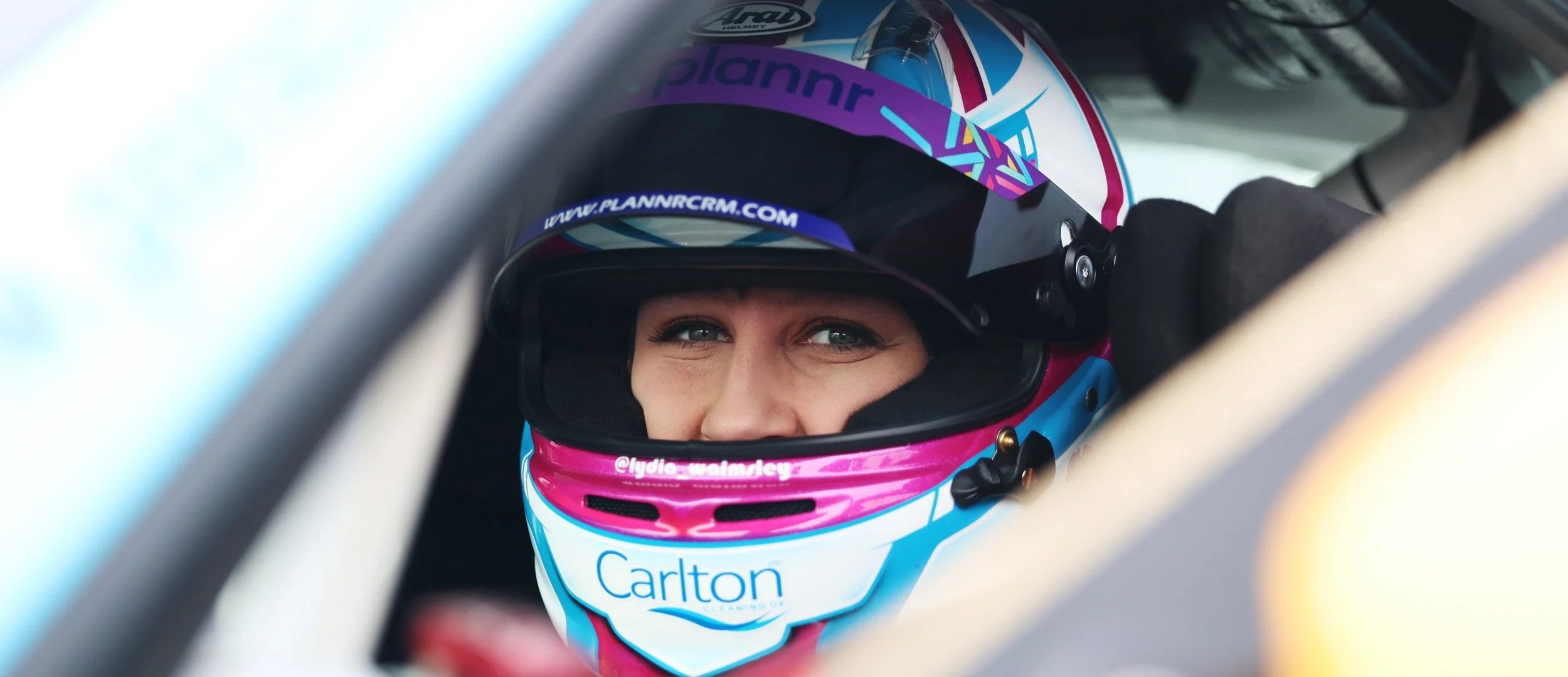
“Other teams would know what they were doing from one weekend of practice,” she explains. “We’d take eight times as long to figure things out because we could only try one setup at a time.
“I’ve never had any data to compare with – just my own,” she adds.
“Working with Graves Motorsport meant having access to other drivers and footage, which was brilliant. When someone was quicker or handled a corner better, we could instantly review the video and learn from it.”
That backing showed in the results. Lydia achieved podium finishes in every race of her rookie 2025 Porsche Sprint Challenge GB campaign – missing out only once due to a technical retirement – and ultimately ended the year as runner-up in the Clubsport Pro class.
Yet the family approach, for all its challenges, brings its own unique strengths.
The investment is emotional as well as professional. Achievements feel different when Dad is chief mechanic, Mum handles logistics, and close family friend and garage owner Dave Barber completes the operation.
That’s why her historic JCW finish, years in the making with her close-knit team, remains such a special memory.
“Some people might have said that wasn’t a huge result,” Lydia reflects. “But we’d spent so long trying to get there. You really do appreciate it when you’ve seen everything that’s gone into making it happen.”
““You really do appreciate it when you’ve seen everything that’s gone into making it happen.””
No waiting
Hindsight has a way of stripping away the noise of the grid. When Lydia looks back to her earliest memories of racing, she wishes she’d worried less as a young driver and enjoyed the experience more.
“I’ve been a serial worrier my whole life,” she admits. “Even when I was eight years old, I was putting pressure on myself. I didn’t enjoy motorsport quite as much as I should have.
“You’re allowed to put pressure on yourself when you’re 23 and racing professionally, but when you’re younger, you should be enjoying it.”
Yet turning that self-criticism from “I’m not good enough” into “what can I do better?” serves as an incredible strength.
Motorsport, like any elite pursuit, demands resilience. It requires the ability to face challenges without letting them define you, and to keep pushing when the path forward is uncertain.
““Don’t wait for permission. If you want it badly enough, that should be all you need to find your way.””
“I’ve learned that setbacks shouldn’t stop you from doing what you want to do,” Lydia says. “Take securing your budget for the season – you’ll get 100 rejections before you get that one all-important yes. It teaches you a new level of resilience, that’s for sure.”
The most important lessons, though, have helped form the foundations of life off the track: self-belief, independence, and the understanding that the most unforgiving opponent often comes from within.
It’s a battle Lydia’s fought since she first stepped into karting – and one she’s finally starting to win.
“When I was younger, all the boys would be friends with the other boys, and I wasn’t interested in that.” she reflects.
“I didn’t care that I was the only one – it didn’t matter to me. Whatever it is you’re passionate about, being alone should never be a barrier. Your passion should always drive you forward.
“If there’s one thing I’d want young people – especially girls – to take from my story, it’s that. Don’t wait for permission. Don’t wait until you see someone who looks like you doing it. If you want it badly enough, that should be all you need to find your way.”