Behind the player
At 18, Anastasia Zarycká Polách was winning. She reached the Australian Open girls’ doubles final and climbed to world No. 21 in the junior rankings. But inside, burnout was slowly creeping in.
By 23, she’d stepped away from professional tennis – drained from years of balancing full-time education with elite training, navigating the financial realities of life outside the top 100, and the weight of wanting to give back to a family who’d sacrificed so much.
Speaking to The 1v1 Project, Anastasia reflects on why she walked away from the sport, the questions that followed, and how she’s returning to tennis – this time, without needing to prove anything to anyone.
“I put an unhealthy amount of pressure on myself to perform,” Anastasia reflects. “My family had made so many sacrifices. People had believed in me when I didn’t believe in myself. I felt I had to give back through my results.
“But I never really saw myself as good enough. Proving myself became something I had to do every day.”
For someone who appeared to be thriving on the outside, this internal pressure became unsustainable – ultimately leading to a decision that brought a mixture of relief and loss.
““I never really saw myself as good enough. Proving myself became something I had to do every day.””
Early foundations
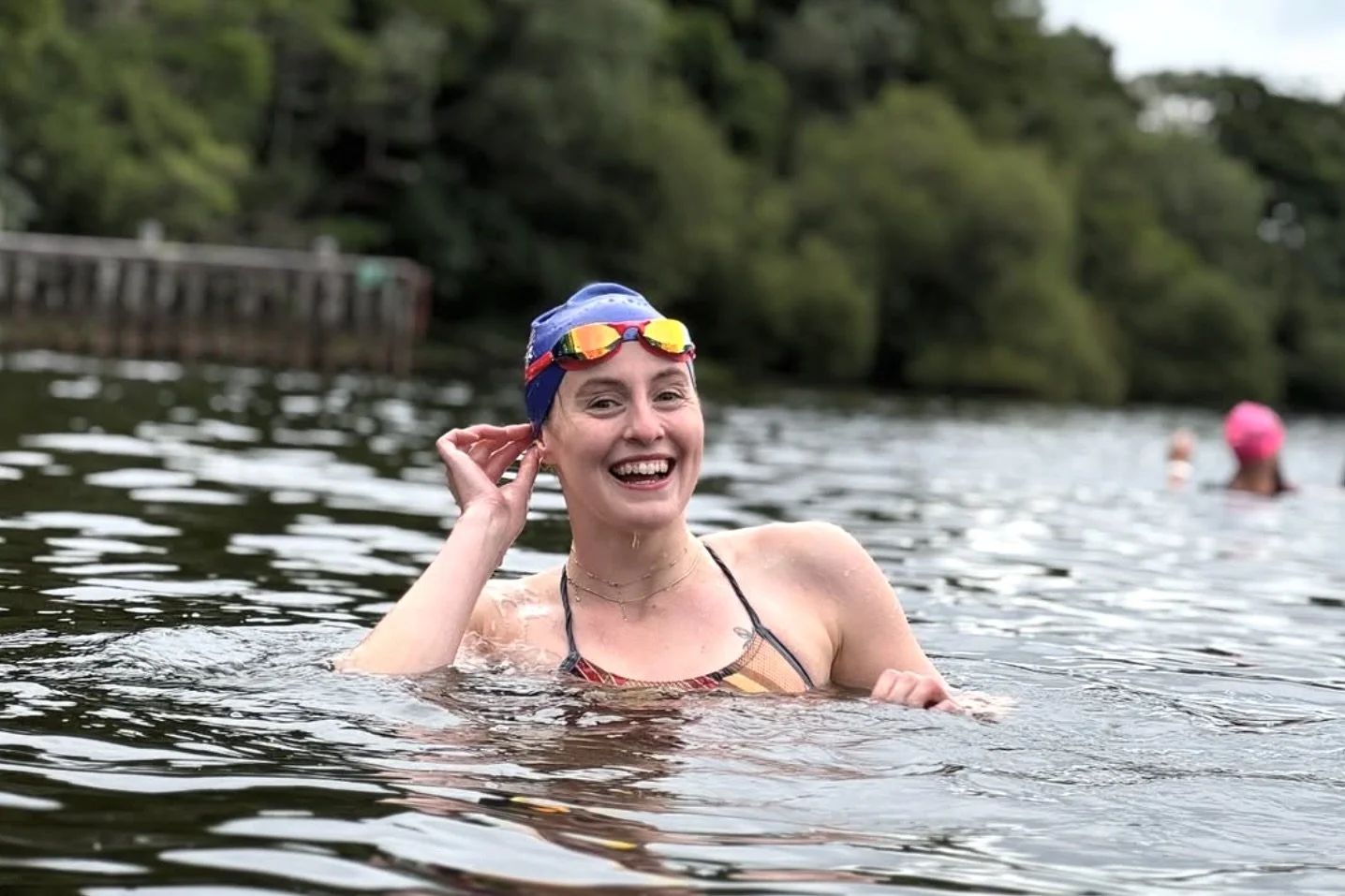
Anastasia’s entry into tennis began at four years old, watching Maria Sharapova on television.
“I really admired her fighting spirit, her grit and just how powerful she was,” she remembers.
While she briefly tried swimming and ballet, tennis quickly became the primary focus. But unlike many young players who commit entirely to sport, Anastasia’s family maintained a clear hierarchy: school first, tennis second.
“There was always a clear distinction,” she explains. “I really enjoyed tennis, but I knew that study had to come first. Marks were important, so I didn’t really consider tennis as a career going forward when I was young.”
That changed around 15, when her results on the international scene began showing promise. She started to see that she enjoyed travelling and competing – and that there might be a way to make a living out of doing exactly those things.
In tennis, the progression is gradual – from a few sessions per week learning the basics, to training six times per week, to the inevitable decision about whether to commit completely.
“A day only has so many hours,” Anastasia notes. “When you’re an up-and-coming junior, you have to start making choices. Do I ask my school for an individual plan? Do I move my schooling online? You have to travel so much for tournaments – something has to give.”
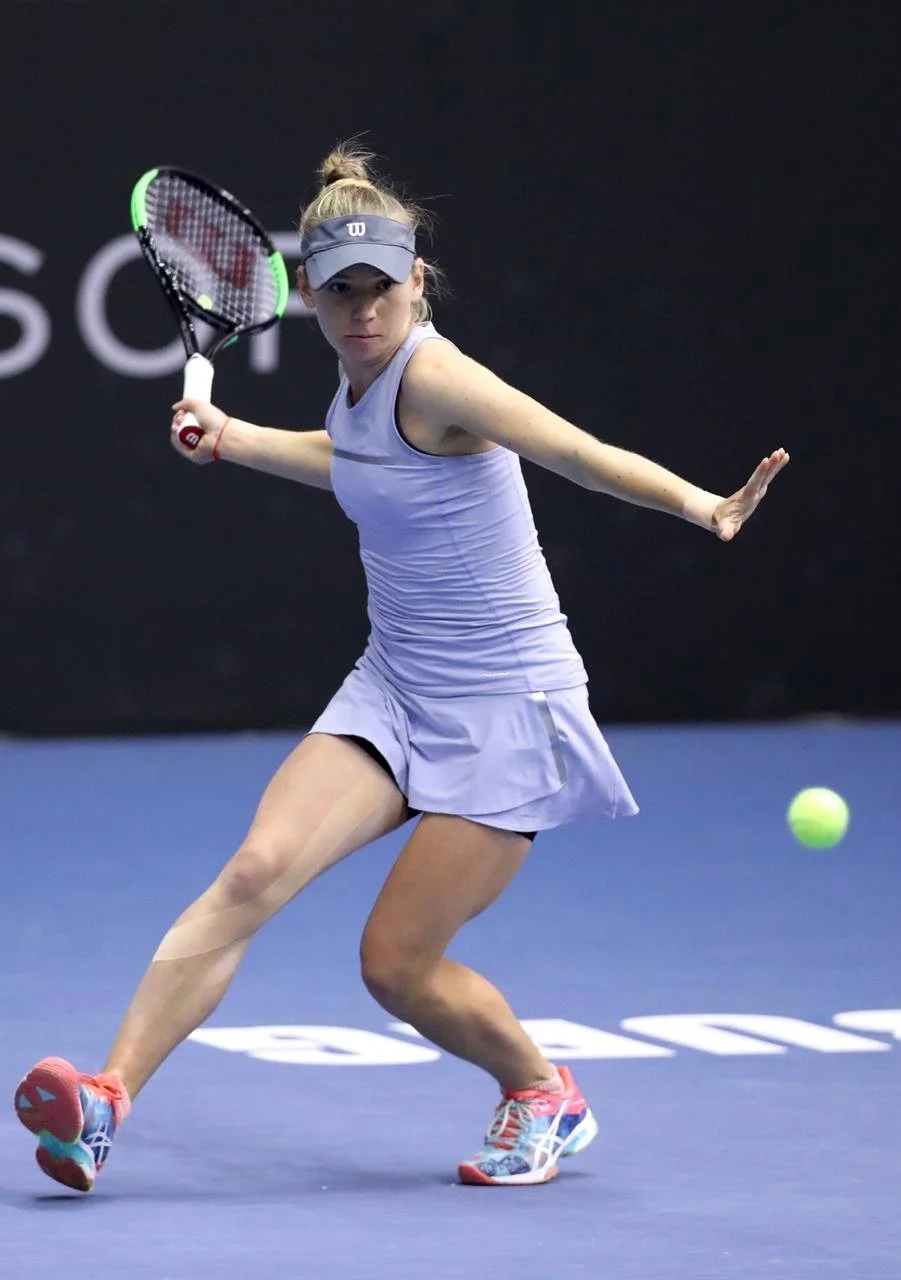
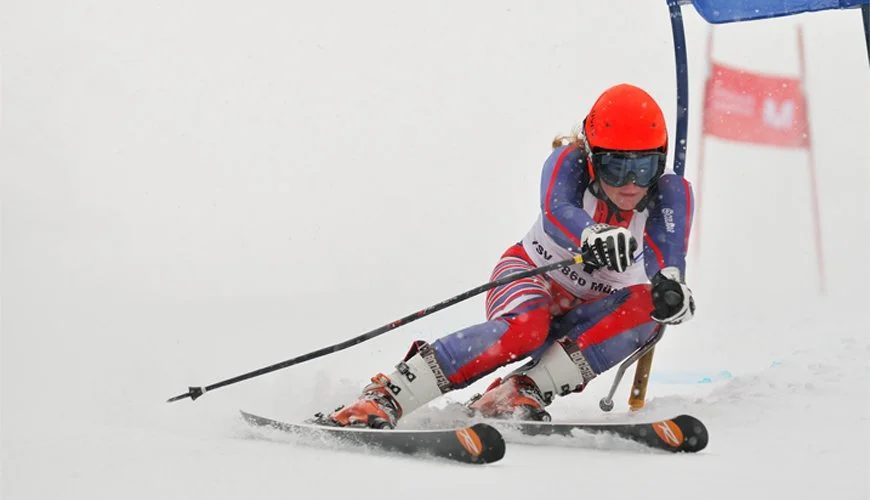
Anastasia as a young tennis player, before the difficult decision about whether to commit completely to the sport
Balancing act
By 18, Anastasia had reached the junior Grand Slams. She was representing Ukraine but received no financial support from the federation, all while maintaining full-time education alongside elite training.
“It was an incredibly intense time,” she says. “It was honestly just school, practice, some extra work, and sleep. Then all over again.
“I’m really grateful for that time and how it came to be. But I wouldn’t have been able to do it alone. The support of my mum and my coach who stayed late just to practise with me because I came in so late from school – that was incredible.”
Yet even with those results, she never quite believed she was good enough.
“I don’t think I would have kept going if there weren’t some results on the international stage,” she admits. “But I never really saw myself as good as maybe those around me could see.”
And representing Ukraine while training alongside top Czech athletes in Prague added another dimension to that self-doubt.
“I had this feeling that to keep training there, to keep competing with the best of the best, I had to show that I was at least matching their level,” she explains. “That was a little bit of extra pressure.”
““I don’t think I would have kept going if there weren’t some results on the international stage.””
Professional reality
Three years after playing junior Grand Slams, Anastasia reached a career-high of world No. 206 in singles – a number that sounds impressive but reveals the harsh economics of professional tennis.
“Unfortunately, only about the top 100 can actually make a good living out of the sport,” Anastasia notes. “The divide is still very much there, even though being 206 in the world sounds great on paper.”
At the lower-level tournaments where players ranked outside the top 200 compete, prize money barely covers expenses. First-round exits can leave players out of pocket after factoring in travel costs, accommodation, equipment and coaching fees that add up relentlessly.
Around rankings 200 to 230, players can access Grand Slam qualifying draws – the preliminary tournaments at Wimbledon, the US Open and other major events, where prize money is substantially higher.
But even then, players on lower budgets will only just be breaking even. The real financial breakthrough is reaching the top 100, where main draw Grand Slam entries become possible.
For Anastasia, reaching 206 didn’t guarantee stability. Funding came from friends and family pitching in, plus some equipment sponsorship. There was no private coach travelling with her, no team cushioning the financial burden.
“It adds a lot of stress when you finally make it to a tournament,” she says. “You’re thinking, ‘If I win this match, I can pay for half a season of expenses.’ You’re not just playing tennis – you’re calculating survival.”
““You’re thinking, ‘If I win this match, I can pay for half a season of expenses.’ You’re not just playing tennis – you’re calculating survival.””
Breaking point
2019 was Anastasia’s best year in terms of results. But her body was sending different signals. Small injuries kept piling up, each one manageable on its own but collectively draining.
“I have photos somewhere where I’m almost taped up head to toe,” she remembers. “The tape was literally holding me together, physically and mentally, so I could step out and go for it on court.”
By the end of that season, she knew something had to change. She approached the next pre-season determined to prioritise her health. But the day before leaving for her first tournament of 2020, she became unwell and needed antibiotics.
Then COVID hit.
“When all the lectures went online, I was like, ‘Oh my god, finally I can catch up,’” Anastasia remembers. She was studying biochemistry at university alongside her tennis career, and for the first time, the forced pause made her consider what life might look like away from sport.
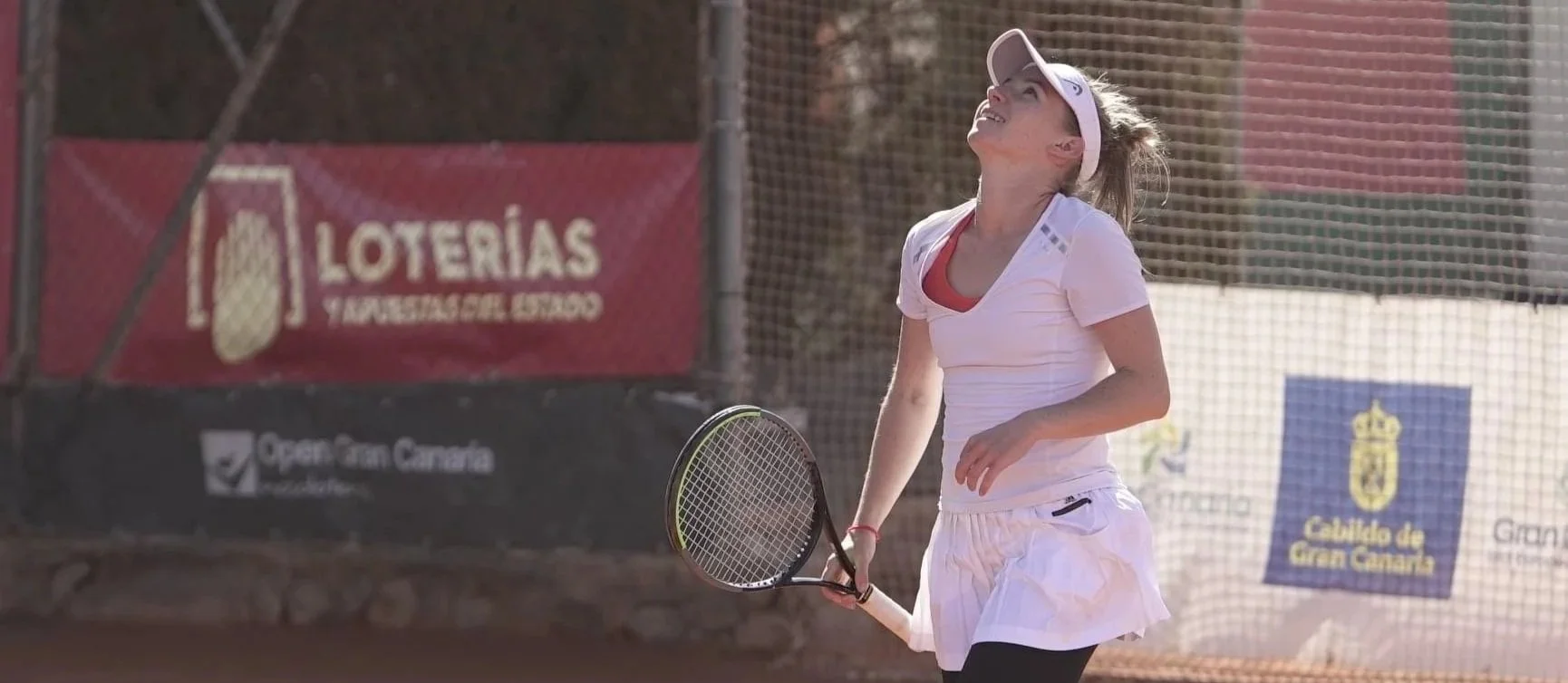
“It really benefitted my academic career. And spending more time at home, with people outside of the sport, made me question for the first time whether tennis had to be everything.”
In the end, it was the pressure she’d long been carrying that forced a change.
“I reached a point where all of this was creating too much noise in my head,” she says. “Very slowly, I came to a decision. I was talking to a coach, and it just made so much sense to me to walk away. I genuinely felt I was ready to go, that I had given it my all.”
When she says all, she means it.
“I didn’t have anything more to give to tennis at that time. I was so drained. The only way I could see myself being healthy and leading a normal life was by stepping back.”
““I didn’t have anything more to give to tennis at that time. I was so drained.””
Aftermath
The decision brought immediate relief. But the transition opened up new questions.
“My head was like a pressure cooker – once the lid comes off, all the steam escapes,” Anastasia describes. “I definitely felt lighter after walking away. But outside of the sport and performing well, I didn’t really have a bigger purpose.”
As well as confronting the fear that she’d let people down, she began wondering if friends would still want to associate with her now that she wasn’t “this tennis player travelling the world.”
“It doesn’t make any sense, even now when I say it out loud,” she acknowledges. “But that was when I realised how much my tennis results had defined who I was and how deeply performance was tied to my identity.”
She kept asking herself the same question: who am I?
“So much of it was connected to the sport,” she says. “I started signing up to the most random classes and courses just to get a taste of something new. It was a big trial and error process of me trying to find different interests.”
But one answer kept emerging: she actually enjoyed playing tennis.
“My family would ask, ‘What do you enjoy doing? Maybe try that,’” she remembers. “And I would always answer, ‘Honestly, I really enjoy playing tennis. I feel good when I’m on court.’
“It was an interesting process of separating the whole professional sports lifestyle from the fact that I genuinely do love tennis. I enjoy feeling the ball on my strings and being out there with other players.”
““My head was like a pressure cooker – once the lid comes off, all the steam escapes. I definitely felt lighter from walking away.””
Coming full circle
Gradually, Anastasia came back to tennis – not as a professional chasing results, but simply to play.
During a research project in Australia – by then pursuing a master’s in neuroscience after completing her biochemistry degree – she became involved with the university tennis team.
“All of us shared this real passion for tennis,” she says. “We just showed up and trained together with no expectations. That reminded me it was always about loving the game, not proving anything.”
Back in Prague, she’s recently started coaching at a local tennis club. What she brings is rooted in what she wished she’d had as a young player: an environment where it’s safe to be human, not just an athlete.
“I’m amazed at how little it takes to make someone feel seen,” she reflects. “There are so many ways to show a player you value them as a person, not just an athlete – that who they are off court matters just as much to you as their performance.”
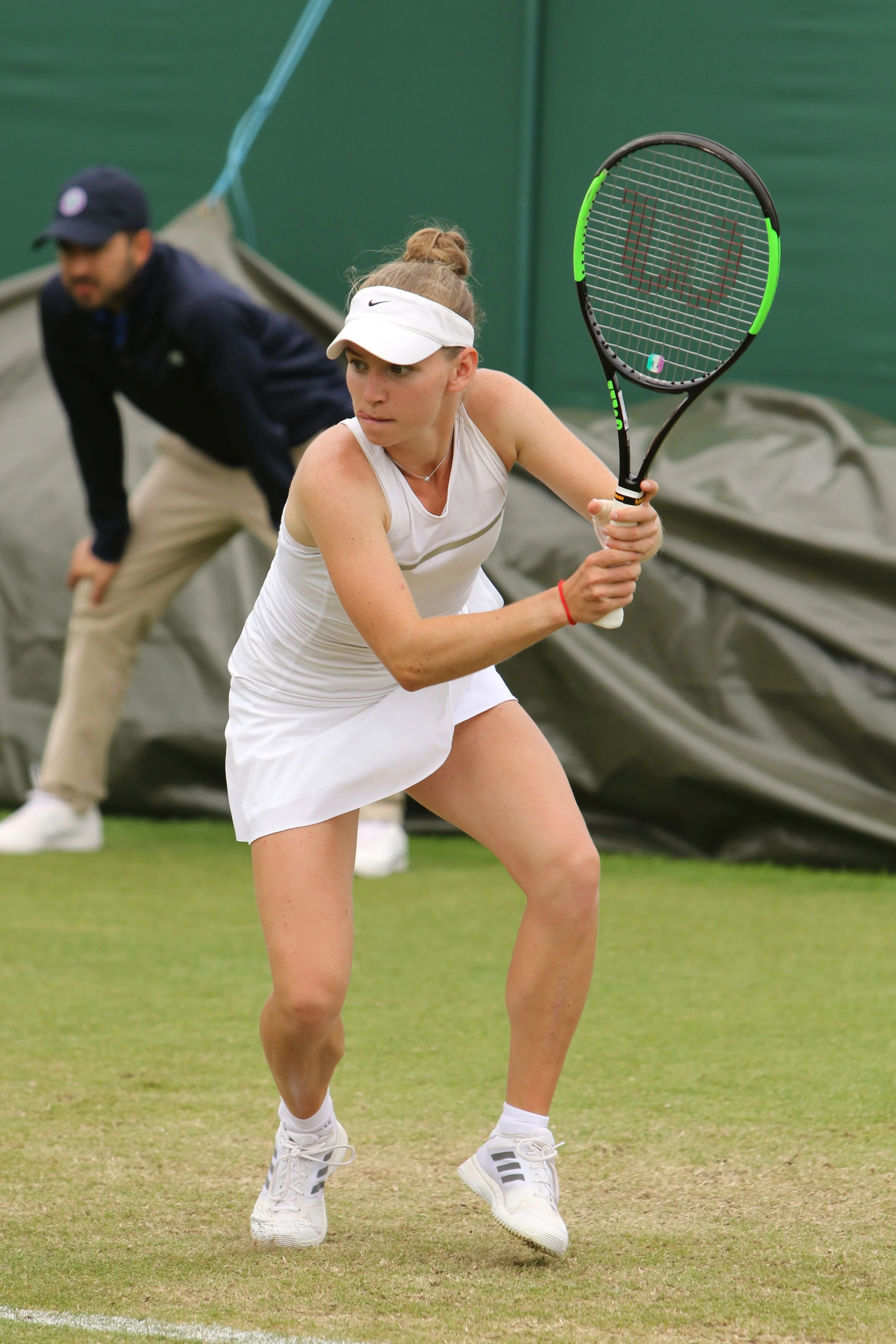
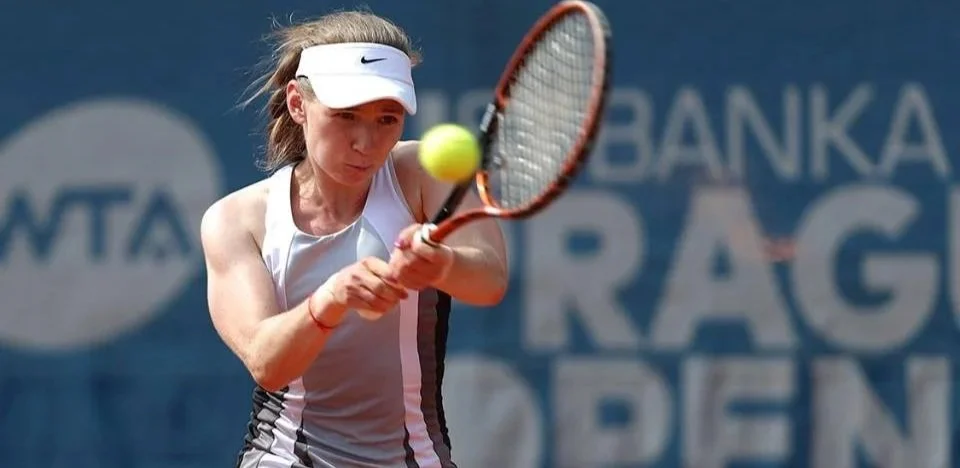
Anastasia has returned to tennis on her own terms – coaching in Prague and playing for love of the game, not to prove anything
Bigger picture
When Anastasia reflects on her tennis career, she now sees what she accomplished, not what she didn’t. She reached junior Grand Slams, climbed to world No. 206, and gave everything she had.
“Maybe I could have made better decisions, or gotten more outside advice on the trajectory of my career,” she reflects. “But with everything available to my family and me at the time, we made the very most of it.
“I’m happy and proud of what was a whole team effort.”
If there’s one thing she hopes others take from her journey, it’s the importance of having these conversations.
“Athletes need role models opening up about their mental health,” she says. “It was definitely tricky for me at times. I would have wished for more support.
“I didn’t feel good enough or like I was doing enough. But looking back, I was doing so much more than I realised – and I want others to see that in themselves too.”
For young athletes struggling with similar battles, her message is about creating space – literally and mentally.
“Take a step back, take a breath,” she offers. “Establish that we want to be kinder to ourselves. Yes, you’re here pushing yourself. But at the same time, you’re still a person.
“And that person deserves to feel good.”